| OCR Text |
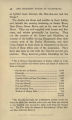
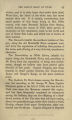
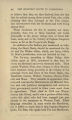
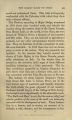
Show 40 THE SHORTEST ROUTE TO CALIFORNIA. Another exception to the universal characteristic of desert is the abundance of tlie dwarf cedar, which is to be seen on almost every one of the mountain ridges, and which high up in the mountains is not unfrequently intermingled with the pine and moun-tain mahogany. The abundance of this cedar, as well as occasional supply of other kinds of timber, has made Captain Simpson's routes, independent of their being the shortest across the Great Basin, decidedly the most practicable for the overland telegraph. The portion of the country traversed which may be called unqualifiedly desert is, on his more northern route, the region between Simpson's Springs in the Champlin Mountains, and the Sulphur Springs at the east base of the Tots- arr or Goshoot Range, a distance of eighty miles; albeit the grass and water at Fish Springs intervene, to make the greatest distance be-tween water and grass forty- eight and a half miles; between the west base of the Se- day- e Mountains and Carson Lake, a distance of fifty miles; and between Carson Lake and Walker's River, a distance of twenty-one miles. On Captain Simpson's return or more south-ern route, between Carson River and Carson Lake, a distance of twenty- three miles; and between the Perry range and the Champlin Mountains, a distance of one hundred and three miles; though Chapin's Springs and Tyler Spring, with their limited pasture- ground, and the Good Indian Spring, with its small supply of water but abundance of grass, within this interval alleviate in a very material degree this last stretch and take it out of the category of continuously unmitigated desert. |