| OCR Text |
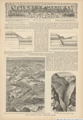
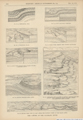
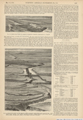
Show MAY 18, 1878. SCIENTIFIC AMERICAN SUPPLEMENT, No. 124. 1967 where, in two or three places, volcanoes standing on the plateau above have poured streams of lava over the edge of the cliffs, forming a rugged slope which may be climbed with difficulty. Next comes the Shi'-wits Plateau, a barren, naked region. Here and there springs burst from beneath the basaltic cliffs, and deep gulches and canons are cut by the streams. About these springs and in the deep gulches the Shi-wits Indians live, cultivating little patches of corn, gathering seeds, eating the fruits and fleshy stalks of cactus plants, and catching a rabbit or a lizard no wand then; and terminates the elevated part of the Colorado River basin. The remaining two-thirds of the river, from the Grand Wash to the Gulf of California, flows through a generally lower region of which nothing need be said. The valley of the Grand Wash is a desert of broken rocks and naked sands. There are two or three springs in the valley, where squalid Indians live, in a climate so warm and arid that they build themselves no shelter. In the Grand Wash the summit of the Carboniferous rocks is deeply buried beneath sandstones and shales of a later origin. FIG. 25.-BIRD'S-EYE VIEW OF CLIFFS OF EROSION THROWN FORWARD BY A FAULT. dirty, squalid, but happy, and holding their barren land the Eden of the earth. In the region above the Hurricane Ledge are extensive grazing lands, and where there are a few springs for irrigation the Mormons raise the products of a temperate climate. Below the Ledge, along the Virgin and Santa Clara rivers, ai*e two or three small towns, where the inhabitants cultivate subtropical products, and a stone may be thrown from the land of the potato and apple to the land of the fig and sugar cane. The Grand Wash fault consists of two cliffs, the lower 1,500 or 1,800 feet high, and the upper 1,000 feet or more. The Grand Wash Valley is at the foot of the Grand Canon, The upper surface of the district adjacent to the Grand Canon is the summit of the rocks of the Carboniferous age, but north from forty to sixty miles we find rocks of a later origin in four lines of cliffs facing the south. Going north from the Grand Canon the Shin-ar'-ump Cliffs, with a cap- Slng of conglomerate, are first met; then the Vermilion lilt's, with harder rocks above and softer below ; next come the Gray Cliffs, with a gray homogeneous sandstone at the base, capped by limestone containing Jurassic fossils. These three lines of cliffs are represented in Fig. 24. The next escarpments encountered in our northward progress are the Pink Cliffs, so called because stained by oxide of iron. The numerous hills to the south of these cliffs are carved out of strata of Cretaceous age. The cliffs are capped by rocks of Tertiary origin. The ascent from the base of the Shin-ar-ump Cliffs to the summit of the Pink CliffB is but 4,000 feet, but as the dip is toward the north, the thickness of the beds here coming to the surface is as much as 10,000 feet. Though in general these cliffs trend east and west, their direction is varied by faults in the following peculiar manner. Wherever a north and south fault is found, the block which has been thrown down has its lines of cliffs carried southward, or toward the axis of upheaval, or, if we are to consider the displacement as caused by upheaval, the blocks , uplifted have their lines of cliffs set farther back to the north; and the amount of this backward forward displacement is in direct ratio to the amount of vertical displacement in the fault or monoclinal fold. The higher region has suffered more erosion, so the cliffs of the higher blocks stand farther back from the axis of upheaval than those of the lower blocks. (Fig. 25.) Not only are there great benches caused by faults, running north and south, but there are other benches running east and west, due to erosion. The cliffs of erosion are very irregular in direction, but somewhat constant in vertical outline; the cliffs of displacement are somewhat regular in direction, but very inconstant in vertical outline. This inconstancy is due to the frequent changes in the character of the fault, as previously suggested by Figs. 16 to 22. In the Echo Cliffs, Fig. 26, a line of cliffs of erosion and a slope of displacement are placed back to back. The position of the latter is essentially permanent, but the cliffs of erosion have probably been carried back to their present position from Marble Canon by the ceaseless denudation of the rains. Where the fold begins the erosion of the strata gradually ceases, for it is apparent that the rains cannot wash out strata situated below the level of the surrounding surface. Hereafter the action of the water upon the Echo Cliffs will be in wholly obliterating the ridge. (To be continued.} FIG 27 -BIRD'S-EYE VIEW OF THE GRAND CANON LOOKING EAST FROM THE GRAND WASH. ONE BIRD ECHO CLIFFS ; TWO BIRDS, KAIBAB PLATEAU; THREE BIRDS, TO-RO'-WEAP CLIFFS : FOUR BIRDS, HURRICANE LEDGE ; FIVE BIRDS, SHI-WITS PLATEAU, THE HOT SPRINGS, BATH COUNTY, VIRGINIA. THIS famous medical fountain, one of the great natural curiosities of America, is situated in the beautiful valley that lies at the western base of the Warm Springs Mountain, in Bath county, Va. It is approached from either Millboro' (twenty miles distant), or Covington (eighteen miles distant), on the Chesapeake and Ohio railroad, over finely graded turnpike roads, and except that short distance, has an unbroken railroad connection with the principal cities on the Atlantic seaboard. It can be reached from New York in almost twenty four hours, and from Washington city in but little over twelve. Within the grounds are found, in close proximity, numerous bold springs of hot and cold mineral water, ranging in temperature from 50 to 110 degrees Fahrenheit. The different Hot Springs make their appearance in a line extending from the base of the mountain almost straight down a lawn in front of the hotel, the soil of which has the appearance of having been washed out of the base of the mountain to its present locality, and is highly charged with carbonates of the alkaline earths. The flow from the springs is a constant and regular current with unchanging temperature; arising from great depth, the contingencies that control surface springs do not influence them. The Boiler Baths are supplied by numerous hot springs which issue from the earth under the floor of the pools at a temperature of 110 degrees Fahrenheit, and retaining a permanent standard of 106 degrees in the full bath. Suitable machinery has been provided, by means of which invalids who cannot walk or stand without inconvenience, may be lowered into the bath, either in a recumbent or sitting posture. The mineral constitution of these baths, as determined by the analysis made by Col. Wm. Gilham, of the Virginia Military Institute, is as follows: One gallon of water contains of Carbonate of lime . ............... 17'3471 grains. " of magnesia........ ... 2'6873 " of protoxide of iron..... 01189 Sulphate of lime......... ........ 1*7357 " of magnesia............ 5'6589 " of potassa ... .......... 1 -3431 " of soda................. 1-0222 Chloride of potassium . .......... 0*1597 of. sodium............... 0-1211 Silica.............................. 1-7467 The Sulphur Baths are supplied from a remarkably bold spring of 102 degrees temperature. The mineral contents in a gallon of the water are as follows : Carbonate of lime ................. 16*4434 grains. of magnesia......... .... 2*8037 of protoxide of iron...... 0*0670 Sulphate of lime....... .......... 2*1039 of magnesia... .... ... 5*1052 of potassa............... 1 '8240 of soda.................. 1-0087 Chloride of potassium ........... 01703 of sodium............... 01335 Silica.............................. In this analysis no notice is taken of gaseous contents, but the presence of a notable amount of sulphureted hydrogen i is unmistakably revealed by the odor apparent at the source, I and there is, moreover, a white sulphurous deposit very 1 similar to that seen at <descri>MAY 18, 1878. SCIENTIFIC AMERICAN SUPPLEMENT, No. 124. 1967 where, in two or three places, volcanoes standing on the plateau above have poured streams of lava over the edge of the cliffs, forming a rugged slope which may be climbed with difficulty. Next comes the Shi'-wits Plateau, a barren, naked region. Here and there springs burst from beneath the basaltic cliffs, and deep gulches and canons are cut by the streams. About these springs and in the deep gulches the Shi-wits Indians live, cultivating little patches of corn, gathering seeds, eating the fruits and fleshy stalks of cactus plants, and catching a rabbit or a lizard no wand then; and terminates the elevated part of the Colorado River basin. The remaining two-thirds of the river, from the Grand Wash to the Gulf of California, flows through a generally lower region of which nothing need be said. The valley of the Grand Was |