| OCR Text |
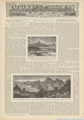
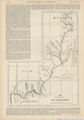
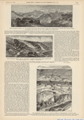
Show APRIL 27? 1878. . SCIENTIFIC AMERICAN SUPPLEMENT, No. 121.' 1919 THE COLORADO RIVER FIG. 11.-ALCOVE AND BAD-LANDS SOUTH OF THE UINTA MOUNTAINS, CALLED THE YELLOW HILLS. This Region in the noonday sun looks "Like a Billowy Sea of Molten Gold." may call antecedent, adding another to the varieties of valleys found in this region.* In other parts of the mountain region of the West are valleys having directions dependent on corrugation. These may be styled consequent valleys. extended over the strata now exposed, it is not easy to perceive why the rains falling equally over the whole surface should not wear the country down comparatively level. The formation of abrupt cliffs by the rain is explained as follows: THE COLORADO RIVER. FIG. 12.-HOG-BACK VALLEYS NEAR THE UINTA MOUNTAINS. These Ridges sometimes rise to a height of a thousand feet. A few miles south of the mouth of the Uinta River the Green enters the Canon of Desolation, the walls of which steadily increase in altitude to its foot, where they terminate abruptly in the Brown Cliffs; the river immediately enters Gray Canon, with low walls gradually rising till they end in like'manner in the Book Cliffs, running in a direction transverse to the river. Likewise the walls of Labyrinth Canon are low above, and increase in height as the river descends till the Canon is terminated by the Orange Cliffs. (See Fig. 18.) Thus, in ascending the river three great plateaus inclining toward the north are traversed, forming three geographic terraces many hundred feet high and many miles wide. The lower step of this great stairway, the Orange Cliffs, is more than 1,200 feet high, and the step is two or three score miles in width. From the Orange Cliffs north to the Book Cliffs is a gradual descent till the foot of the latter is not more than 100 feet higher than the foot of the Orange Cliffs. The Book Cliffs are about 2,000 feet high, and the terrace above about twenty miles wide. This terrace likewise descends till at the foot of the Brown Cliffs it is but 200 feet higher than the foot of the Book Cliffs. The Brown Cliffs are more than 2,000 feet high, and the plateau above gently descends to the valley of the Uinta River. The traveler in passing north apparently ascends over 5,000 feet, but in reality climbs but a few hundred, for the stairs are tipped backward. The rocks through which Labyrinth Canon is cut extend back under the beds of Gray Canon, and these run back beneath the Canon of Desolation. At one time the Desolation and the Gray Canon strata extended over the Labyrinth Canon strata, but they are washed away. It was explained how the unequal erosion of upturned strata surrounding the Uinta Mountains formed the hog-backs. Such ridges are seen when the dip of the rocks is at a high angle-from twenty to forty-five degrees; but where the dip is from one to five degrees the cut edges of the strata form steep cliffs. If the Uinta fold were depressed till the dip was almost imperceptible, the inclined ridges would become vertical cliffs and would occur at much greater distances from each other. In the three canons are rocks belonging to three distinct geological periods. In the Canon of Desolation are tertiary sandstones; in Gray Canon, cretaceous sandstones, shales, and impure limestones; between the head of Labyrinth Canon and the foot of Gray Canon rocks of cretaceous and Jurassic age are found, but they are soft, and have not withstood the action of the water so as to form a canon. The Brown Cliffs are apparently built of huge blocks of rock, plainly exhibiting the lines of stratification. The beds are usually massive and hard, breaking with an angular fracture. The cliffs are very irregular, set with crags, towers, and pinnacles. The upper beds of the Book Cliffs are like those described, and they form a cap to extensive laminated beds of blue shales, in which, along the line of the cliffs, are curious effects of rain sculpture. The whole face of the rock is set with buttresses, and these are carved with a fret-work of raised vertical lines. Labyrinth Canon is cut through a homogeneous sandstone. The cliffs in which it terminates consist below of rounded buttresses and mounds and hills of sand, above of columnar structure, and sometimes great columns appear fluted. If the formations composing these several lines of cliffs * As there are no extended geological charts published of this region, We can only enumerate the geological features without locating them. The climate is exceedingly arid and the scant vegetation forms no protection against the beating storms. Though but little rain falls, what there is has an eroding action difficult to conceive by one who has studied the degrading action of water in a country covered with grasses, shrubs, and trees. In a country well supplied with rains, and having abundant vegetation, the water penetrates the soil and disintegrates the underlying solid rock as fast or faster than it is washed away by the rains, and the indurated rock has no greater endurance than the more friable shales and sandstones. But in a dry climate the softer rocks are soon carried away where the edges of strata are exposed, while the harder are" undermined and break off in steep fractures, and falling upon the plain below are broken into pieces which the rain more readily^ disintegrates or carries away. Occasionally the ever-retreating and irregular line of cliff isolates a portion of the terrace and thus buttes are formed. Looking from the Book Cliffs over the plain below, vast numbers of buttes are seen scattered over scores of miles, each so regular and beautiful that one can scarcely cast aside the belief that they are works of Titanic art. It seems as if a thousand battles had been fought on the plain below, and on each field the giant heroes had built a monument. But no hand has placed a block in these wonderful structures; the rain-drops of unreckoned ages have cut them all from the solid rock. The summit of the high plateau through which the Canon of Desolation is cut is fretted into pine-clad hills with nestling valleys and meadow-bordered lakes between, for to this upper region the clouds impart abundant moisture. In the meadows herds of deer range. Huge elk, with heads bowed by the weight of ragged horns, feed among the pines, or crash with headlong speed through the undergrowth at the report of the rifle. The river successively traverses Stillwater, Cataract, and Narrow Cafions. Along the general slope on each side are numerous buttes, which are often standing columns. From them the Indians named the region loom-pin, Wu-near, Tu-or Land of Standing Rocks. (To be continued.) THE COLORADO RIVER. Fra. 13.-ORANGE CLIFFS IN FOREGROUND, 1,200 FEET HIGH. Between these Cliffs and the Book Cliffs, in the middle ground, the terrace is from 40 to 60 miles wide. The next terrace is 20 miles wide and the Book Cliffs and the Brown Cliffs, the latter in the background, are about 2,000 ft. high. |