| OCR Text |
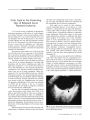
Show ORIGINAL CONTRIBUTION Posterior Ischemic Optic Neuropathy After Minimally Invasive Prostatectomy Eric D. Weber, MD, Marcus H. Colyer, MD, Robert L. Lesser, MD, and Prem S. Subramanian, MD, PhD Abstract: Two patients developed postoperative ischemic optic neuropathy ( ION) after laparoscopic radical prostatectomy. One operation was robotically assisted; the other was performed with the conventional laparoscopic technique. These new minimally invasive techniques offer many advantages, but they require steep supine head- flexed ( Trendelenburg) positioning. Until they are mastered by surgeons, operative times may be prolonged beyond those associated with the traditional technique. As a result, ION may occur more frequently. (/ Neuro- Ophthalmol 2007; 27: 285- 287) schemic optic neuropathy ( ION) is uncommon after prostate surgery for benign or malignant disease ( 1- 3). Studies of perioperative ION have implicated prone positioning and significant blood loss as likely risk factors ( 4), neither of which typically occurs in modern open radical retropubic prostatectomy ( RRP) or transurethral resection of the prostate ( TURP). Laparoscopic radical prostatectomy ( LRP) has been increasingly used since its introduction in 1997. Approximately 35,000 robot- assisted laparoscopic prostatectomies ( RALPs) were performed in the United States in 2006. Some techniques use robotic technology for improved depth perception and eye- hand coordination. A skilled surgeon can complete the RALP procedure in approximately 150 minutes with minimal blood loss ( 5), but even an experienced urologic surgeon new to the procedure may need to perform more than 150 laparoscopic operations to become proficient in Ophthalmology Service ( EDW, MHC, PSS), Walter Reed Army Medical Center, Washington DC; Departments of Ophthalmology and Visual Science and Neurology ( RLL), Yale University School of Medicine, New Haven, Connecticut; and Division of Ophthalmology ( PSS), Uniformed Services University of the Health Sciences, Bethesda Maryland. Address correspondence to Prem S. Subramanian, MD, PhD, Wilmer Eye Institute, Wilmer B- 31, 600 N. Wolfe St., Baltimore MD 21287; E- mail: psubraml@ jhmi. edu manipulating unfamiliar instruments and acclimated to a restricted field of view ( 6). During this transitional period, the procedure can be prolonged beyond the average time of 160 minutes for an open RRP, and blood loss may be increased. In addition, LRP and RALP require steep, supine, head- flexed ( Trendelenburg) positioning ( 7), which may produce venous stasis or facial edema, increasing the risk of ION ( 8). The following two cases illustrate how the added operative time and compromised patient positioning may be factors in inducing ION after RALP or LRP CASE REPORTS Case 1 A 62- year- old man underwent RALP for adenocarcinoma of the prostate. General anesthesia was induced using intravenous propofol, lidocaine, and vecuronium and was maintained with desflurane. Results of preoperative laboratory studies performed 1 week before the procedure were all within normal ranges, with a hemoglobin of 14.2 g/ dL. Blood pressure on the morning of surgery was 127/ 66 mm Hg, and the patient had no history of hypertension. Shortly after induction of anesthesia, the patient became hypotensive ( 90/ 45 mm Hg) for about 1 hour with a nadir of 85/ 35 mm Hg. No blood loss had occurred. The patient was then placed into a steep Trendelenburg tilt in a low lithotomy position. The total operative time was 6 hours 35 minutes, and for > 5 hours, the blood pressures were maintained in a range of 90- 135 mm Hg systolic and 50- 95 mm Hg diastolic. Multiple intraoperative hemoglobin measurements ranged from 8.2 to 11.9 g/ dL. Approximately 4 hours into the procedure, after the patient had received 4,300 mL of lactated Ringer's solution and had lost approximately 550 mL of blood, the patient was given a transfusion of 1 unit of packed red blood cells. The procedure was prolonged by the loss of one needle during bladder repair but concluded uneventfully. Total blood loss was 1,200 mL. On the first postoperative day, the patient complained of " purple vision" and loss of inferior visual fields in both eyes. His symptoms worsened when he was upright. On that day, a neuro- ophthalmologist recorded visual acuities J Neuro- Ophthalmol, Vol. 27, No. 4, 2007 285 J Neuro- Ophthalmol, Vol. 27, No. 4, 2007 Weber et al FIG 1. Case 1. Humphrey visual fields, performed 1 day after prostatectomy, demonstrate bilateral inferior altitudi-nal defects. of 20/ 25 in both eyes. He noted no facial edema. Optic discs were described as of normal appearance with a cup/ disc ratio of 0.25. Automated Humphrey visual fields demonstrated bilateral inferior altitudinal defects ( Fig. 1). Hemoglobin was 9.7 g/ dL. Blood pressure and pulse were normal. The patient was observed for 3 days and discharged, during which time his vision remained unchanged. At a follow- up examination 3 months later, visual acuities were 20/ 20 in both eyes, and visual field examination confirmed stable loss of bilateral inferior fields. Ophthalmoscopy disclosed bilateral superotemporal optic disc pallor ( Fig. 2). Case 2 A 64- year- old man underwent a laparoscopic prostatectomy without the assistance of robotic technology General anesthesia was induced, and he was put in a steep Trendelenburg position shortly thereafter. Preoperatively hemoglobin was 11.4 g/ dL, total cholesterol was 374 mg/ dL, and low- density lipoprotein was 260 mg/ dL. The only medication was olmesartan for hypertension. Blood FIG 2. Case 1. Three months after prostatectomy, optic discs show bilateral superotemporal pallor that was not present on the initial postoperative examination. 286 pressure on the morning of surgery was 130/ 80 mm Hg, within his usual range. Total operative time was approximately 9 hours, and blood pressure varied from 100/ 50 to 165/ 70 mm Hg. At no time was he made intentionally hypotensive. Total blood loss was 500 mL, and no transfusions were given. His procedure was considered otherwise uncomplicated. During the procedure, the patient received 6,500 mL of intravenous crystalloids. Hemoglobin had dropped to 9.3 g/ dL on the first postoperative day. When the patient awoke after surgery, he complained of seeing a rainbow in his superior fields that lasted for a few seconds but shortly thereafter he noted that " everything went black." When the patient's wife first saw him after surgery, there was so much facial swelling that she reported she could barely recognize his face. On the following day, an ophthalmologist noted no light perception vision in both eyes and administered intravenous methylprednisolone, a treatment that was terminated after 1 day because of corticosteroid- induced psychosis. Brain MRI and MRA were normal. Twelve days after surgery, a neuro- ophthalmologist recorded light perception vision in the right eye and no light perception vision in the left eye. The pupils did not constrict to direct light. The right optic disc had a 0.1 cup with mild temporal pallor; the left optic disc had a 0.2 cup with more notable temporal disc pallor. The remainder of the ophthalmologic examination was normal. Blood pressure was 178/ 92 mm Hg. Two months after surgery, the patient had had no improvement in vision and now had substantial optic disc pallor in both eyes. DISCUSSION When compared with standard RRP, RALP and LRP performed by experienced surgeons have been shown to reduce intraoperative blood loss and hasten postoperative recovery ( 5). The advantages of the robotic system include a stereoscopic view for depth perception, masking of an operator's tremor by filtering hand movements, and more intuitive movement of the instruments themselves ( 5). The main disadvantage of the robotic system is added cost for the system and for each procedure. Another significant disadvantage is the total surgical time- either laparoscopic technique takes longer than conventional RRP to allow for equipment setup and testing. In the two previously reported cases of ION after conventional RRP, prolonged, intentional hypotension was reported ( 1,3). Hemodilution of almost 50% was reported in the single case of vision loss after TURP ( 2). In our two cases, these factors were not so prominent. Rather, two other factors may have played a causative role: prolonged operative time and steep supine, head- flexed ( Trendelenburg) © 2007 Lippincott Williams & Wilkins Posterior Ischemic Optic Neuropathy J Neuro- Ophthalmol, Vol. 27, No. 4, 2007 positioning. Case # 2 had marked facial edema after a 9- hour procedure. Impaired venous return has been implicated in ION after radical neck dissection and jugular ligation ( 4). Although our Case # 1 lost vision inferiorly, he fortunately retained good foveal function with 20/ 20 vision in each eye. Our Case # 2 underwent a longer procedure and had significant facial swelling and a more devastating visual outcome. LRP, especially when performed by an experienced surgeon with the da Vinci surgical robot, may reduce surgical morbidity and postoperative functional recovery. At this time, such technology is found primarily at teaching centers where the cost of the robot can be justified for research and training but also where a large percentage of RALPs are done by resident physicians and more experienced surgeons who are nevertheless naive to the robotic procedure. The result may be longer than average surgical times and prolonged positioning of the patient in a less favorable position. Therefore, ION may become more frequent as laparoscopic techniques are more widely used. REFERENCES 1. Foroozan R. Shock- induced anterior ischaemic optic neuropathy after radical prostatectomy. Clin Experiment Ophthalmol 2004; 32: 438- 9. 2. Sadaba LM, Garcia- Layana A, Maldonado MJ, et al. Bilateral ischemic optic neuropathy after transurethral prostatic resection: a case report. BMC Ophthalmol 2006; 6: 32. 3. Williams GC, Lee AG, Adler HL, et al. Bilateral anterior ischemic optic neuropathy and branch retinal artery occlusion after radical prostatectomy. J Urol 1999; 162: 1384- 5. 4. Buono LM, Foroozan R. Perioperative posterior ischemic optic neuropathy: review of the literature. Surv Ophthalmol 2005; 50: 15- 26. 5. Menon M, Shrivastava A, Kaul S, et al. Vattikuti Institute prostatectomy: contemporary technique and analysis of results. Eur Urol 2007; 51: 648- 57. 6. Smith JA Jr, Herrell SD. Robotic- assisted laparoscopic prostatectomy: do minimally invasive approaches offer significant advantages? J Clin Oncol 2005; 23: 8170- 5. 7. Phong SV, Koh LK. Anaesthesia for robotic- assisted radical prostatectomy: considerations for laparoscopy in the Trendelenburg position. Anaesth Intensive Care 2007; 35: 281- 5. 8. Dunker S, Hsu HY, Sebag J, et al. Perioperative risk factors for posterior ischemic optic neuropathy. J Am Coll Surg 2002; 194: 705- 10. 287 |