| OCR Text |
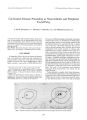
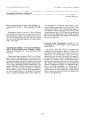
Show Journal of Neuro- Ophthalmology 19( 4): 240- 241, 1999. © 1999 Lippincott Williams & Wilkins, Inc., Philadelphia Cat- Scratch Disease Presenting as Neuroretinitis and Peripheral Facial Palsy P. Keith Thompson, B. S., Michael S. Vaphiades, D. o., and Michael Saccente, M. D A 40- year- old woman with Cat- scratch disease sought treatment for neuroretinitis OD and right peripheral facial nerve palsy. To our knowledge, this is the first case of an adult with a peripheral facial nerve palsy from Cat- scratch disease and the first case of a patient with both neuroretinitis and peripheral facial nerve palsy. Key Words: Bartonella henselae- Cat- scratch disease- Macular star- Neuroretinitis- Peripheral facial nerve palsy. CASE REPORT In September 1998, a 40- year- old woman developed a rash, a low- grade fever, chills, and neck tenderness following a kitten scratch. Five weeks later she developed painless visual loss OD. Neuro- ophthalmologic examination revealed a visual acuity of 20/ 30 OD and 20/ 15 Manuscript received May 19, 1999; accepted August 24, 1999. From the Departments of Ophthalmology ( M. S. V.), Neurology ( M. S. V.), Infectious Disease ( M. S.), and the College of Medicine ( P. K. T.), University of Arkansas for Medical Sciences, Little Rock, Arkansas, U. S. A. Address correspondence and reprint requests to Michael S. Vaphiades, D. O., Harvey & Bernice Jones Eye Institute, Department of Ophthalmology, University of Arkansa for Medical Sciences, 4301 West Markham, Mail Slot 523, Little Rock, AR 72205- 7199. OS, and use of Ishihara pseudo- isochromatic color plates revealed color vision of 13.5/ 14 OD and 11/ 14 OS. Goldmann perimetry showed a small central scotoma to the I2e isopter OD and a full visual field OS ( Fig. 1). Pupils were 5 mm OU, with normal reactivity; there was no relative afferent pupillary defect. Motility and slit- lamp examinations were normal, showing no vitreous cells. Ophthalmoscopy revealed a mildly elevated optic nerve with a macular star OD ( Fig. 2) and a normal optic nerve and macula OS. The patient had no skin lesions, cervical lymphadenopathy, parotid gland enlargement, or auricular lesions. A detailed neurologic examination was normal. The patient was prescibed oral double- strength trimethoprim- sulfamethoxazole ( 160 mg trimethoprim and 800 mg sulfamethoxazole) twice a day for 10 days for a presumed Bartonella henselae infection. Five days later she developed a mild right lower motor neuron facial palsy. The results of her examination were otherwise unchanged. Oral corticosteroids were offered, but the patient declined. Testing included a complete blood count, determination of electrolytes and glucose levels, toxoplasmosis and a Lyme titer, and a Veneral Disease Research Laboratory ( VDRL) test, the results of which were normal. B. henselae titer showed an IgG of 0.8 (< 0.9) and an elevated 111* FIG. 1. Goldmann perimetry showing a central scotoma to the I2e isopter OD and a full visual field OS. 240 CSD PRESENTING AS NEURORETINITIS AND FACIAL PALSY 241 FIG. 2. Right fundus with a mildly elevated optic nerve and a macular star. IgM of 2.1 (< 1.1). Results of gadolinium- enhanced magnetic resonance imaging of the brain were normal. Examination 1 month later showed a visual acuity of 20/ 15 OU. Ophthalmoscopy showed a resolving macular star OD. The right peripheral facial palsy had resolved. DISCUSSION Cat- scratch disease ( CSD) is a systemic infection from the gram- negative bacilli B. henselae, which is transmitted by the bite or scratch of an asymptomatic feline carrier. Cat- scratch disease usually presents as a benign chronic lymphadenitis, although central nervous system involvement, including neuroretinitis and cranial neuropathies, has been reported ( 1- 6). Cat- scratch disease has been associated with a facial nerve palsy in pediatric patients with ages ranging from 18 months to 9 years ( 5,7,8). The facial palsy is most likely caused by vasculitis of the nerve itself or by irritation of nervous structures and vasculature by an enlarged, inflamed parotid gland ( 2,6,8,9). Before this case report, only one patient was reported with a peripheral nerve palsy ( median nerve palsy) and neuroretinitis ( 10). To our knowledge, this is the first case of an adult patient with a peripheral facial nerve palsy from CSD, and the first patient with both a peripheral facial nerve palsy and neuroretinitis ( 1- 12). For patients with neuroretinitis and a lower motor neuron facial palsy, it is important to consider CSD in the differential diagnosis. Acknowledgment: This work was supported in part by an unrestricted grant from Research to Prevent Blindness, Inc., New York, NY. REFERENCES 1. Chrousos GA, Drack AV, Young M, Kattah J, Sirdofsky M. Neuroretinitis in cat scratch disease. J Clin Neuroophthalmol 1990; 10: 92- 4. 2. Margileth AM, Wear DJ, English CK. Systemic cat scratch disease: report of 23 patients with prolonged or recurrent severe bacterial infection. J Infect Dis 1987; 155: 390- 402. 3. Bar S, Segal M, Shapira R, Savir H. Neuroretinitis associated with cat scratch disease. Am J Ophthalmol 1990; 110: 703- 5. 4. Ulrich GG, Waecker NJ, Meister SJ, Peterson TJ, Hooper DG. Cat scratch disease associated with neuroretinitis in a 6- year- old girl. Ophthalmology 1992; 99: 246- 9. 5. Carithers HA, Margileth AM. Cat- scratch disease. Acute encephalopathy and other neurologic manifestations. AJDC 1991; 145: 98- 101. 6. Roebuck DJ. Cat- scratch disease with an extra- axial mass. Am J Neuroradlol 1998; 19: 1294- 5. 7. Walter RS, Eppes SC. Cat scratch disease presenting with peripheral facial nerve paralysis. Pediatrics 1998; 101: 1- 3. 8. Premachandra DJ, Milton CM. Cat scratch disease in the parotid gland presenting with facial paralysis. Br J Oral Maxillofac Surg 1990; 28: 413- 5. 9. Laudenbach P, Harar E, Hallard M, Gros F. Parotiditis in association with cat scratch disease. Nouv Presse Med 1974; 3: 1753- 4. 10. Sweeney VP, Drance SM. Optic neuritis and compressive neuropathy associated with cat scratch disease. CMAJ 1970; 103: 1380- 1. 11. Keane JR. Bilateral seventh nerve palsy: analysis of 43 cases and review of literature. Neurology 1994; 44: 1198- 202. 12. Bleicher JN, Hamiel S, Gengler JS, Antimarino J. A survey of facial paralysis: etiology and incidence. Ear Nose Throat J 1996; 75: 355- 8. J Neuro- Ophthalmol, Vol. 19, No. 4, 1999 |