| OCR Text |
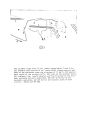
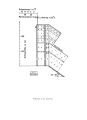
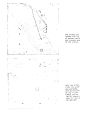
Show 8 further clarification and judgement, which was added to the documentation by the expert opinion of May 14, 1964: a. State of the Accident Slope Immediately Before the Accident The condition of the snow cover was described in the expert opinion of May 1, 1964. What was not then known or taken into consideration-- because unknown and not reconstructible from the investigation of April l4-- was the fact that many surface sluffs were visible on the accident slope. As far as could be determined from the film, these sluffs covered the entrance zone over most of the slope and only at the south end did they leave free a continuous vertical stretch, namely the zone chosen fro the ill- fated descent. The question is then raised, whether these sluffs were evidence of have been drawn from them. These small avalanches took the form of falling surface snow masses which either slid without external cause or else had been dislodged by snow chunks from cornices, overhanging rocks or caused by skiers. Time of their occurrence must have been after a warm period or after intensive radiation such as in late afternoon, but in any case at a time when the surface crust had softened to an appreciable depth and lost its bearing capacity. Even if these sliding masses are relatively small avalanches, they exercise a definite disturbance on the underlying layers. In the foregoing case the snow weight alone of these sluffs must have amounted to 500 tons; even if the wet snowslides came down individual 1y-- as apparently must have been the case-- a very significant loading of the snow cover by |