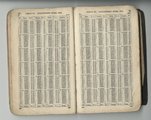
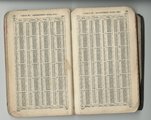
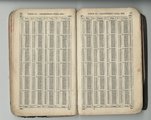
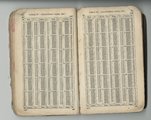
| OCR Text |
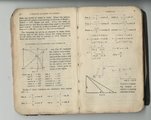
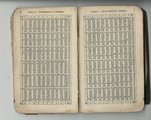
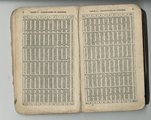
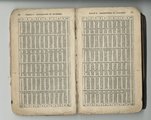
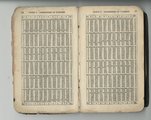
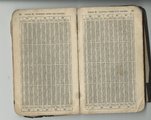
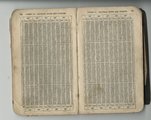
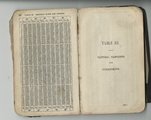
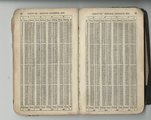
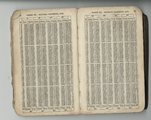
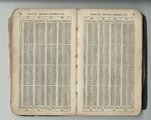
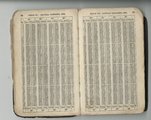
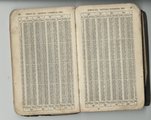
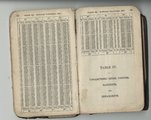
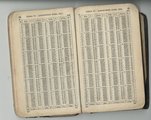
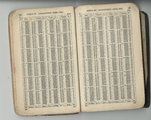
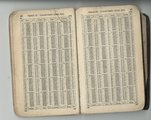
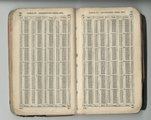
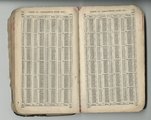
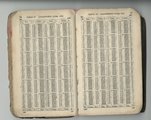
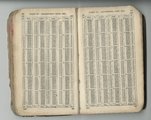
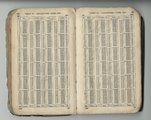
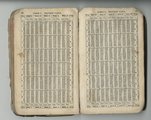
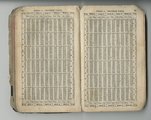
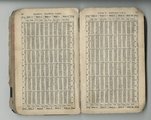
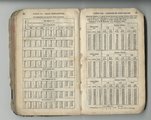
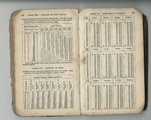
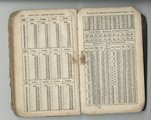
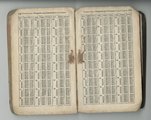
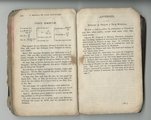
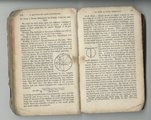
Show A MANUAL OF LAND SURVEYING. APPENDIX. CURVE FORMULZE. Chord def, = chords? R = 'r cot. 54 I 'r = R tan. a I R 50 T = 50 tan. V2 I I R = Sin. D UE MERIDIAN. METHODS or FINDING A TR D Si I n. dwa A 1A...." A- I"- mg. "n." éammmm:w;ag . ,. . ‘ i _A - ' "." ‘3: a .. '.,i,: "‘ ‘~;~.' .11 . 1.11,",‘3 a No. chords = 5%- Sin. D = .30. R 50 tan. % I Sin. D = T E=Rex.sec.%l E = T tan. 34 I Tan. def. = $6 chord def. raThe square of any distance, divided by twice the e, Curv to dius, will equal the distance from Tangent ' very nearly. s to a 1° Table XX contains Tangents and External found, ,7 _' 1 curve. Tan. and Ext. to any other radius may be sit nearly enough, by dividing the Tan. or Ext. oppo curve. the given Central Angle by the given degree of e an if To find Deg. of Curve, having the central Angl An . 'ral Tangent: Divide Tan. opposite the given Cent _ gle by the given Tangent. Angle and To find Deg. of Curve, having the Central ral AnExternal: Divide Ext. opposite the given Cent ‘ g . gle by the given External. e by» To find Nat. Tan. and Nat. Ex. See. for any angl n angle diTable XX: Tan. or Ext. of twice the give the Nat. Tan. ' vided by the radius of. a 1° curve will be or Ex. Sec. To find angle for a given distance and deflection. Rule 1. Multiply given distance by .01745' (def. for 1° uct. _ for 1 ft.), and divide given deflection by the prod and divide Rule 2. Multiply given deflection by 57.3, the product by the given distance. ance: . To find deflection for a given angle and dist by the 7 Multiply the angle by .01745. and the product distance. ation of Polaris at To final a true meridian by observ al mean solar time any time when visible, correct loc ~. being known. , Montana, furnishes Charles W. Helmick of Helena ermining a meridian by an the following method of det It obviates the time. observation on Polaris at any by and is extensively used use of astronomical time, in Montana. deputy mineral surveyors te of thehour and minu 1. Sight to Polaris and note local mean solar time. the time of elongation 2. Take from the ephemeris diflerence be- ation. The nearest the time of observ t. the hour angle east or wes , "ween these times will be to degrees and minutes. 3. Reduce this hour angle e resulting angle by the 4. Multiply the cosine of th ne latitude expressed in mi azimuth of Polaris for th of the approximate azimuth utes. The result will be es s. If the time piece giv Polaris expressed in minute ely the azimuth will rar local time Within 2 minutes, ' vary 1'. -' *1; ' |