| OCR Text |
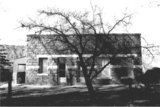
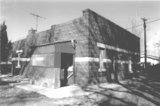
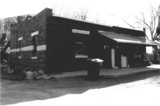
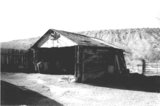
Show NFS Form 10-900-a Utah WordPerfect 5.1 Format (Revised Feb. 1993) OMB No. 10024-0018 United States Department of the Interior National Park Service National Register of Historic Places Continuation Sheet Section No. 8 Page 6 Clerico Commercial Building, Spring Glen.Carbon County, UT was a coal stove and a copper-tub washing machine. The wash house also served as an apartment for men who worked on the farm. They worked for $1.00 a day and room and board during the Depression. The property Gabriella had purchased came with a horse and buggy, and the land had several fruit trees. They raised all their own cows, chickens, and pigs from which they made their own butter, cheese, sausage, salami, ham, and bacon. They also grew hay and grain, and with their hay baler they contracted out baling throughout the county. Gabriella became one of the few women in the area who was heavily involved in peddling produce and home-baked bread at the coal camps, for this was one of the few acceptable economic activities in which immigrant women could engage. She traveled to the various coal camps around the Helper area, including Spring Glen, Kenilworth, Spring Canyon, Standardville, Latuda, Mutual, Rains, Helper, and Castle Gate. She would not return until she had sold everything in her wagon. Gabriella would also knit sweaters and socks for everyone. With her treadle Singer sewing machine, she would sew Portland Cement sacks into towels, Semolina flour sacks into petticoats and bloomers for the girls, or Utah & Idaho sugar sacks into sheets. She was a model of heroism in adversity and taught her progeny industriousness, honesty, cheerfulness, frugality, and abundance of appreciation for the bountiful blessings of life in America. Her motto was "Sempre Avante" (Always Forward) It carried her from poverty to prosperity. She was a real planner and a good record-keeper. With a ten cent notebook and pencil, she kept track of all receipts and expenditures, paying her bills ahead of time (for a discount) and was particularly prompt with property taxes. She was always ahead of time for appointments .4 The Clerico's fortunes would eventually expand from the farm to the development of two commercial buildings and five rental homes. They additionally financed several farms for their friends and helped establish their sons in businesses of their own. The Clerico's believed that Spring Glen Road, then known as the Public Highway, would someday be a busy commercial area, as Helper's Main Street was. So, along this road they decided to build their commercial buildings. In April 1914, they mortgaged their tract of land for $2,000 and began to build this, their first commercial building.5 Battista Clerico hired Italian-immigrant rock masons as laborers to construct the building. They had no English language skills and were staying with the Clerico's at the time, so they built the structure in exchange for room and board.6 "Turcasso, op. cit., 6-10. 5The Clerico's second business venture, in 1931, was the building of a skating rink named "Radiant Roller Rink" located a short distance south of the Clerico Commercial Building on Spring Glen Road. The concrete block and stucco commercial building has subsequently housed a dance hall and a dance club. Currently, the building is a residence and has been only slightly altered on the exterior. 6lnterview with Margaret Turcasso by Karen Torres-Flemett. X See continuation sheet |