| OCR Text |
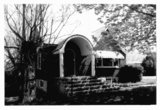
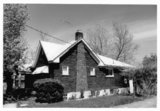
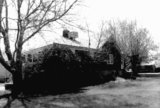
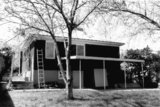
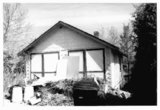
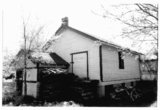
Show NPS Form 10-900-a Utah WordPerfect 5,1 Format (Revised Feb. 1993) 0MB No. 10024-0018 United States Department of the Interior National Park Service National Register of Historic Places Continuation Sheet Section No. 8 Page 2 Gappmayer, Roy & Florence, House, Orem, Utah County, UT Narrative Statement of Significance The Roy H. & Florence B. Gappmayer House, built c.1935, is significant for its association with the "Establishment of Orem: 1914-1941" category of the Historic and Architectural Resources of Orem, Utah, Multiple Property Submission. The house was constructed by Roy Gappmayer whose family moved to the Provo Bench at the turn of the century and became prominent fruit growers. Gappmayer was known throughout his life not only for his fine horticultural skills and fruit growing, but for his community involvement and service. This house is a good representation of the kinds commonly built in Orem during this time period and reflects the history of the Gappmayers who lived here during the community's growth as a city. During the "Establishment of Orem" period, the Provo Bench saw more changes associated with growth than in the previous periods. After the first decade of the 20th century, fruit growers on the bench realized that if their prosperity was to continue they must market their produce outside of the area and outside of Utah. With the establishment of a rail line in Orem, the "Orem Line," plus the increasing popularity of the automobile, the fruit and produce industries were able to market their products all over the western United States. With the increased prosperity, the Provo Bench soon became Orem Town in 1919 (in honor of Walter Orem who brought the railroad to the area), and eventually, in 1941, Orem City. The property on which the house is built is a portion of 160 acres of land patented by William Bennet in 1882. Over the next twenty-five years it went through various owners and was parceled off to people until Bartl Gappmayer purchased ten acres from John C. Snow in February 1907. Bartl, an Austrian immigrant who had previously lived in the Heber Valley, and Alberta, Canada, built a small stone house and began farming the land. It was in this house that Roy lived for several years until a large, twostory, brick foursquare was constructed to the northwest of the stone house in 1911. Roy Henry Gappmayer's life represents much of what was happening in the community at this time (c. 1935-41). Born in Buysville, Utah on March 31,1900 to Bartl (Bartylomaos) and Mary Emily Nelson Gappmayer, Roy moved with his family to Raymon, Alberta, Canada when he was two years old. The family moved back to Utah, settling on the Provo Bench and starting a fruit farm. Roy worked at various jobs, including the family farm. After his mother died in 1912, he lived with, and worked for, various relatives and people throughout the region. Because of this situation, he was only educated through the eighth grade. It was while working for an attorney in Manti, Utah, that he met Florence Billings. Florence was born to Ezra G. and Ann Maylett Billings, December 14,1902 in Manti. They were married September 23,1924, in Salt Lake City. For awhile they lived in the family home in Orem and then purchased the land to the north and west. For the first eight years they lived in what is now the garage/cellar (see photographs 4 & 5), until the house was completed in 1935. After marrying, Roy became active in the Church of Jesus Christ of Latter-day Saints again and served various positions until being called as Bishop of the Timpanogos Ward, the first ward on the Provo Bench, which comprised a large geographical area. He served as bishop during 1937-43. Twenty years later he was called as a stake patriarch where he served for almost two decades. |