| OCR Text |
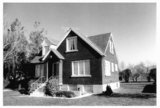
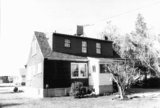
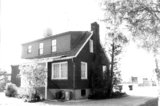
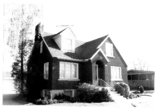
Show NPS Form 10-900-a Utah WordPerfect 5.1 Format (Revised Feb. 1993) OMB No. 10024-0018 United States Department of the Interior National Park Service National Register of Historic Places Continuation Sheet Section No. _8_ Page _3_ Lewis, John & Izola, House, Orem, Utah County, UT The Period Cottage type of house became quite popular between World Wars I and II, as interest in various historic architecture periods increased. Many of these house types were an imitation of medieval buildings based on rectangular, hall-parlor, central passage, or cross-wing floor plans. The English Tudor was the most common of these period revivals used in Utah from 1910-1935. One explanation for this might be the influence English and French architecture had on Americans serving in World War I. Although influenced by large country houses, the Period Cottages are by no means large, but their street-front appearance can make them look deceptively small. They are commonly placed close to the street, but extend far back into the lot. They are not historically accurate but provide an allusion to various medieval stylistic elements, including steeply pitched, roofs with cross gables and asymmetrical facades, imitation half-timbering, and various combinations of materials, including multi-colored brick, stucco, wood siding, and tile or slate roofing. Not as complicated as Victorian house forms, the Period Cottage had a simplified massing which emphasized a less-formal lifestyle. The floor plans are more open, similar to the bungalow, and the foundation was lowered to give better access to the outdoor living areas which were becoming more popular.3 The Lewis house utilizes these features in its designs. The home retains its original fabric and contributes to the historic qualities of Orem. See continuation sheet 3 Thomas Carter & Peter Goss. Utah's Historic Architecture, 1847-1940; Guide. Salt Lake Citv: Graduate School of Architecture. Universitv of Utah |