| OCR Text |
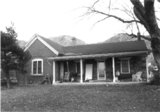
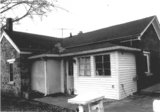
Show NPS Form 10-900-a Utah WordPerfect 5.1 Format (Revised Feb. 1993) 0MB No. 10024-0018 United States Department of the Interior National Park Service - National Register of Historic Places Continuation Sheet Section No. 8 Page 3 Barnard-Garn-Barber House, Centerville, Davis County, UT When grasshoppers destroyed most of the farmers' crops in 1868, many people went to work for the Union Pacific Railroad (DPR). Several lines were built between Ogden and Salt Lake City, with the Bamberger Line becoming the principle means of transportation for produce as well as passengers between Salt Lake City and Ogden. The early architecture displays a visible pattern of building permanent, large, residences of indigenous stone and brick simply reflects the desire of the residents to display the permanence of the establishment of Centerville, ultimately giving it a distinctive visual quality. It does not portray any visible effort to build residences specifically for polygamous marriages even though it was widely practiced throughout the city. The balance of using traditional American building techniques and styles within the framework of a strong Mormon community has given the city's architecture a unique quality that describes simplicity, permanence, and a provides Centerville with a geographic identity. The building of substantial but modest homes continued and new styles and types of residences were introduced to a growing city. City improvements and services began to appear in the 1910s. Transportation and water systems were being developed to better meet the needs of the residents. Electricity was introduced and street lamps were installed. Problems associated with city living were typical. Other problems, associated with agriculture, were not as typical. In 1923 and 1930 canyon floods caused a great deal of damage. After determining that grazing on the mountain side was the cause, cattle and sheep were prohibited from grazing in the foothills. The city continued to grow and city parks were built, trees were planted, and streets were cleaned on a regular basis. Civic pride was a constant in the development of Centerville. Organizations were formed that helped the city prosper. Although Centerville was located between Bountiful and Farmington, the town managed to remain independent and maintain its own identity, displaying a strong sense of civic pride. The city of Centerville was developed around a religious core-ideally and physically-the LDS Church. Many descendants of the early settlers continue to live in Centerville and the sense of family and community remains a constant. HISTORY OF THE BARNARD-GARN-BARBER HOUSE: The original portion of the house is believed to have been built by one of the earliest settlers in Centerville, James Barnard. In addition to a log cabin that may be soon (1997-98) moved from the southeast part of the property, he designed and constructed a simple hall-parlor house of stone c.1854, reportedly one of the largest houses in Centerville at the time.2 James is believed to have been the Smoot, p.1. _X See continuation sheet |