| OCR Text |
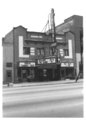
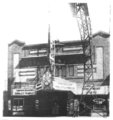
Show Historic Functions (enter categories from instructions) Recreation and Culture; Theater Current Functions (enter categories from instructions) ______ Architectural Classification (enter categories from instructions) Recreation and Culture: Theater Materials (enter categories from instructions) foundation Concrete __ Prairie School Style___________________ walls ____Brick Concrete block roof _____Asphalt other ____Stone (rear wall) Describe present and historic physical appearance. Constructed in 1917, the Elberta Theatre is a two-story brick theater with modest Prairie School styling. It has undergone several additions or remodel ings over the years most notable were those in 1933, 1941, and 1984--but still retains its overall integrity on the exterior. The Prairie School design of the Elberta Theatre makes it unique among the city's commercial buildings. This architectural style is rare in Brigham City with the Carnegie Library and several homes being the only other examples. The theater's principal facade has been somewhat altered, but not enough to lose its historic appearance. The interior of the building has been extensively remodeled with little historic integrity left. Constructed in 19171 of red brick and stucco, the theater is located among the row of commercial buildings on the city's main business block. The taller C.W. Knudson building flanks the theater on the south, and a smaller clothing store adjoins it on the north. Obstructing a full view of the theater is the 1928 "Welcome to Brigham" steel archway which spans Main Street. The front of this two-story theater is a combination of horizontal with vertical elements. The overall shape of the principal facade is wider than it is tall and flat at the top with a gabled parapet at each end. Also important horizontally are a cornice 3/4 of the way up the facade, the second floor sash-style apartment windows, and the 1938 art deco marquee with plastic sign boards. Vertical features are located mostly at the upper level. The tall protruding "Capitol" sign installed in 1934 is the dominant upright feature and it extends above the building. Inlaid light stucco areas go both directions, but are bolder up and down. The horizontal emphasis seems to prevail in spite of changes to the 1917 facade. When the theater was called the Elberta its sign extended outward and parallel to a See continuation sheet 1 "New Pictures House Nearly Completed." Box Elder News. Feb. 27, 1917, p. 1, col. 3. Theatre to Open Monday," Box Elder News. March 9, 1917, p. 1, col. 2. 7. "Elberta 2 "Capitol Theatre Shines Like a Million Dolars [sic]", The News-Journal. August 23, 1938, p. 1, col. 3 'Elberta is Changed to Capitol Theatre", Box Elder News. August 31, 1934, p. 2, col. 7. |