| OCR Text |
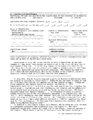
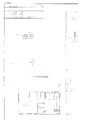
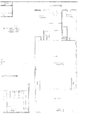
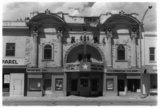
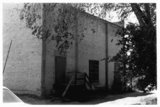
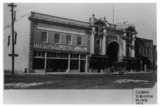
Show 8. Statement of Significance Certifying official has considered the significance of this property in relation to other properties: ___nationally ___statewide Applicable National Register Criteria __X_A Criteria Considerations (Exceptions) ___A Areas of Significance (enter categories from instructions) .EntertaiiijroBnt/Ri&creatign________ ___B ___B _X_C ___C ___p ___D Period of Significance 1912-1936_________ __________________ Significant Dates 1912, 1915 1918-19; 1936 Cultural Affiliation N/A Significant Person N/A Architect/Builder unknown/unknown State significance of property, and justify criteria, criteria considerations, and areas and periods of significance noted above. Constructed in 1912, the Casino Theatre is locally significant as the best example of "high style" architecture in Gunnison and as the first and only theatre constructed in the town. It is the only example of the Beaux Arts style in the town, whose Main Street consists primarily of modestly styled commercial buildings of the late nineteenth and early twentieth centuries. The theatre was used for both movies and live productions, serving for decades as the principal center of commercial entertainment in this small southern Utah community. In June 1912, Sims M. Duggins acquired property on Gunnison*s Main Street with the purpose of erecting an "opera house." Razing of the old adobe building on that lot in October 1912 allowed the construction of the theatre to begin. Though not fully completed, the theatre opened for business on .January 13, 1913.1 Improvements were made to the building over the next several months, including the installation of chandeliers and other lighting on the interior and the addition of an ornamental band of rosettes at window-top height on the exterior. The local newspaper noted that "Manager Duggins ... is determined to spare no expense in making the Casino one of the most attractive amusement halls outside Salt Lake City."2 Still lacking at that time, however, were the columns and statuary on the facade and stage facilities on the interior. The "elaborate ornamental front" was added in July 1915,3 and a rear addition was built c. 1918-19, expanding the stage area for live performances. At that same time a basement was excavated under the stage to accommodate dressing rooms.4 In addition to its primary purpose as a theatre, the building was also designed to accommodate commercial and residential uses (see figure 1). Two small commercial spaces were located on either side of the central, recessed entrance of the theatre. These housed a variety of businesses over the years, including a X See continuation sheet |