| OCR Text |
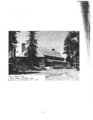
Show OMB No. 1024-0018 Eap. 10-31-14 United States Department of the Interior National Park Service National Register of Historic Places Inventory-Nomination Form Item number Continuation sheet 8 Page 2 their main line in Lund, Utah, to Cedar City. The spur could serve the dual purposes of moving freight--particularly foodstuffs and iron ore--out to the main line from Cedar City while increasing passenger traffic to Cedar City and the loop of parks and monuments within driving distance. The spur could be a lucrative venture in increasing both passenger and freight traffic on their main line.By promoting tourism and providing accommodations the Railroad hoped to lure passenger traffic away from the Santa Fe Railway, the Great Northern, and even the Canadian Pacific which had established connections to parks and built resorts in those areas.I To meet the needs of the tourism industry the Railroad formed the Utah Parks Company, the stock of which was held primarily by a Union Pacific subsidiary. The company was chartered to provide accommodations at the park and monument destinations and to provide transportation to those areas from Cedar City. In 1923 the company hired architect Gilbert Stanley Underwood of Los Angeles to design their Lodge at Zion and to choose the site for the Bryce Lodge. Underwood came to the Union Pacific with a strong working background and degrees from both Yale and Harvard. Underwood began his career as an apprentice in Los Angeles to several important California architects who worked in styles from BeauxArts classicism to Mission Revival. After twelve years he returned to school and finished a Bachelor's degree at Yale and then went on to Harvard for his Master's. He returned to Los Angeles and set up an architectural office. Some of his early designs were for the core park service development in the Yosemite Valley. Although his designs were rejected for a variety of reasons, Stephen Mather, Horace Albright, and members of the early "landscape" staff such as Underwood's friend Daniel Hull, were impressed with his work and may have recommended him for the Utah Parks position. Underwood designed the new lodge for Bryce on which construction began in 1924. That building was completed by early summer, 1925. The north and southeast wings were added i n 1926, and the auditorium in 1927. Most of the wood-frame standard and economy 1 Nicholas Scrattish, "Draft Historic Resource Study, Bryce Canyon National Park" (Denver: National Park Service, Denver Service Center, 1980 draft), pp. 32-33. 234 |