| OCR Text |
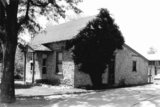
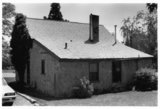
Show Street Address: Architect/Builder: NA/john Alma Adams, William Henry Adams, Olaf Mcnson JE Building Materials: Soft-rock Q UJ ~~~----------- _________________ Building Type/Style: ^11 par lor/vernacular •* Description of physical appearance & significant architectural features: (Include additions, alterations, ancillary structures, and landscaping if applicable) Built in two sections, 1877 and 1889, the John Alma Adams House is a one-story hall-parlor house with a gable roof and soft-rock exterior walls. The only alterations of note are the addition of a porch on the front (c.1939) and the addition of an enclosed frame porch at the northwest corner (c.1970). These do not significantly affect the original integrity of the house. The Adams House appears to be a typical hall-parlor house with a later lean-to addition on the rear, but the opposite building arrangement is true. The two-room section on the back was actually constructed first in 1877. The two-room hall-parlor house on the front was added in 1889J The point at which the two sections join is hardly discernible. The primary facade of the finished house faces south and is symmetrically arranged with a transomed door flanked by two windows. There are two other exterior doors, one on the east and one in the rear portion of the west wall. The westernmost window on the north or back appears to have originally been a door also. Soft-rock was used to fill in the lower portion of that doorway, indicating that it was probably done early on, perhaps when the front section of the house was built. The (See continuation sheet) g ^ g | £ Statement of Historical Significance: Construction Date: 1877 & 1889 Built in two sections in 1877 and 1889, the John Alma Adams House is one of 13 buildings included in the Pleasant Grove Soft-rock Buildings Thematic Resource nomination. Soft-rock buildings are signficant because they help document the distinctive regional diversity found in nineteenth-century building stones in Utah. They also represent a distinct phase of the building construction industry in the Pleasant Grove area. Mormon community building in the Great Basin West rested upon the dual principles of order and permanence, and the grid-iron town plan and the use of stone as an early building material have become important symbols of Mormon settlement values. A great variety of local stones were used throughout the state, and the soft and easily worked tufa stone, popular in Pleasant Grove between about 1865 to 1900 9 remains one of the most distinctive. About 130 soft-rock buildings were known to have once stood in Pleasant Grove, yet there are only 13 well preserved examples today. Most of the earlier buildings, constructed during the 1850s and '60s, were made of adobe, which was easily made and worked. As fired brick became more available and fashionable during the late nineteenth and early twentieth centuries, it replaced soft-rock as the dominant local building material. The remaining soft-rock buildings are important examples of a local architectural tradition and contribute to an understanding of the regional diversity of Utah's early architectural history. Family records provide a clear history of the John Alma Adams House. Following is a description of the original 1877 section of the house as told by John Adams to his daughter. John A. Adams and Mary Alice Frampton were married July 29, 1877 by Bishop Brown in the old Frampton home. They (See continuation sheet) |