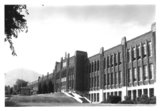
| OCR Text |
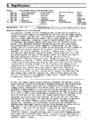
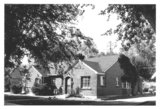
Show NPS Form 10-900-a <M2> OMB Wo> 1024-0018 Expires 10-31-87 United States Department off the Interior National Park Service National Register off Historic Places Inventory-Nomination Form Copperton Historic District Continuation sheet Salt Lake County» Utah_____Item number 8____________Page 4 School (now demolished) was constructed along the south edge of town in 1929, and Bingham High School was built at the north side of town in 1931. The LDS church building, completed for use by 1942, was the first church constructed in the town. The Methodist Church was moved into Copperton in 1948 from its original location at Kearns Army Camp, several miles northeast of town. The third and final church erected in Copperton was the Catholic Church, constructed in 1949. Since none of the churches were built during the historic period (pre-1941) they were not included in the historic district. Commercial buildings, too, have been excluded from the district because they have either been demolished or extensively altered. There were relatively few commercial buildings in the town anyway, because the principal business district in the area was in the town of Bingham, three miles away. The establishment of schools in Copperton and the requirement that teachers live within the boundaries of the district in which they taught resulted in the construction of three buildings for teacher housing in the community. The first, a ten-unit two-story aparment building, was constructed on the property to the immediate west of the high school in 1931. Two sets of duplexes were built to the west of those apartments in 1939. The apartments were occupied by single teachers, but the duplexes were for the exclusive use of married teachers. 14 The teachers' apartments and duplexes were constructed by the Jordan School District with the permission of Utah Copper Company which owned the land. Recreational activities were an important part of life in Copperton. A company ball park was built at the site in the early 1920s even before the town was built. It continued in use until the completion of the high school ball fields and stadium in 1938. The old ball park, located in the center of town, was then replaced with the three blocks of houses between First East and First West streets, from State Highway to Hi 11 crest Street. The high school stadium, a WPA project, is still intact and is used by the Bingham Middle School which currently occupies the old high school building. Though neither the first nor the largest company-built mining community in Utah, Copperton did own the distinction of having the most substantial and well furnished houses of any company town in the state. It was considered the showpiece of Utah Copper Company towns with its modernly equipped, copper accoutered masonry houses. The largest of UCC's towns was Garfield, located twelve miles to the north. It eventually consisted of almost 400 houses, as well as school buildings, churches, and numerous commercial enterprises. Garfield was established in 1906 near the mine's smelter, but in 1957, in order to make way for expansion of the smelter operations, the houses were either demolished or moved from the site. There were also several company towns erected by coal companies in central Utah during the early 1900s. Included among them are Clear Creek, Columbia, Sunnyside, Kenilworth, and Hiawatha. The houses built in those towns were generally neither as large nor as well furnished as the Copperton houses, and were frame instead of masonry buildings. Hiawatha, however, is probably a more complete company town than Copperton. It has a wider variety of resources, including public, commercial, |