| OCR Text |
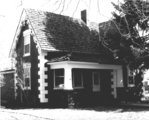
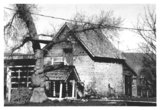
Show Street Address:_________________________________________Site No: Architect/Builder: John Watkins Building Materials: brick Building Type/Style: cross-wing/Gothic Revival Description of physical appearance & significant architectural features: (Include additions, alterations, ancillary structures, and landscaping if applicable) The William Coleman House, built c. 1879, is a 1 1/2 story brick example of the cross-wing house type. The house as a basic L-plan with a forward projecting gable intersected at a right angle by a side wing. There is a central entrance hall containing the staircase, and there is an original rear kitchen ell. Open porches were originally found to both sides of the rear wing. Frame additions to made to the rear of the house c.1950, and a brick bungalow style front porch was added in the 1920s. The house is a good example of the Gothic Revival style. Decorative scroll-cut bargeboards are found along the raking cornices of each gable and on a small dormer contained on the north front of the side wing. Decorative pedimented heads are found over all the openings. The house is brick, painted dark red, and has cut sandstone quoins at the corners. The house remains in good historic condition and remains a fine Utah example of picturesque ideals. Also included in this nomination is a granary. Built of the local "pot rock," this gable-roofed granary was built at approximately the same time as the house. It has a two level rectangular plan, including a basement root cellar and a granary reached by an external stair. A long (See Continuation Sheet) Statement of Historical Significance: Construction Date: Built c. 1879, the William Coleman House is is one of seven houses contained in the ARCHITECTURE OF JOHN WATKINS THEMATIC RESOURCE NOMINATION, having been designed and built by John Watkins, an accomplished early Utah builder. John Watkins 1 work effectively illustrates the dynamic role the professional builder played in shaping Utah's early architectural landscape. While it has been customary for historians to explain Utah architecture from the time of first settlement in 1847 up to about 1890 as the simple extension of eastern folk styles or the replication of popular pattern-book designs, John Watkins 1 houses suggest a more generous appraisal. Slave to neither tradition nor pattern-book, Watkins found useful ideas in both, ideas that formed the basis of essentially new if nevertheless familar designs. From two-room cottages to elaborate Gothic Revival houses to houses intended for multi-family polygamous living, Watkins drew upon his broad building experience to create not copies of other houses, but new ones designed to meet his client's functional, aesthetic, and symbolic needs. The William Coleman house is significant not only as a fine example of the Gothic Revival style in early Utah, but also because it documents John Watkins 1 building capabilities. Drawing upon popular concepts associated with the picturesque style, Watkins was able to create a rich variety of houses by subtly manipulating the cross-wing house form to his designing needs. John Watkins was born in Maidstone, Kent, England in 1834. He received training in the building trade in his native England before joining the Church of Jesus Christ of Latter-day Saints and emigrating to Utah in 1855. Watkins 1 skills were welcomed in the nascent Mormon towns of, first, Provo, and then Midway. In Provo, Watkins helped build the original LDS Tabernacle (1856) and |