| OCR Text |
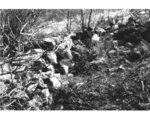
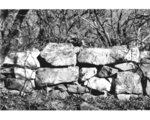
Show NPS Form 10-900-a (3-82) OMB <Vo. 1024-0018 Expires 10-31-87 United States Department of the Interior National Park Service National Register of Historic Places Inventory-Nomination Form Provo Canyon Guard Quarters Continuation sheet Utah County, Utah________Item number 8___________Page 2 Governor Young declared martial law in the territory and the territorial militia, known as the Nauvoo Legion from the Mormons' earlier days in Nauvoo, Illinois, was mustered to help defend the Salt Lake Valley. The majority of the troops, some 1250 men, gathered at Echo Canyon to form the main line of defense at that strategic location. Stone breastworks were constructed on the tops of tall cliffs at the narrowest part of the canyon, and ditches, rifle pits and other fortifications were built below in the bottom of the canyon. In addition to the Echo Canyon fortifications, breastworks were constructed at Mormon Flat, located closer in along the principal route into the Salt Lake Valley, and in Provo Canyon, an alternate route into the valley. Smaller groups of soldiers were sent into Wyoming and Idaho to harass the army as it approached the Utah Territory. Their instructions were as follows: Proceed at once to annoy them in every possible way. Use every exertion to stampede their animals and set fire to their trains. Burn the whole country before them, and on their flanks. Keep them from sleeping by night surprises; blockade the road by falling trees or destroying the river fords where you can. Watch for opportunities to set fire to the grass before them that can be burned. Keep your men concealed as much as possible, and guard against surprise.... P.S. Take no life, but destroy their trains and stampede or drive away their animals at every opportunity.2 By the spring of 1858 the Utah War was well on its way to being resolved. Mormon scouting parties and small bands of militia had harassed Johnston's Army during the fall of 1857 to the point that it was forced to establish a winter carnp outside the Utah Territory near Fort Bridger, Wyoming. That hiatus in the "invasion" allowed diplomatic efforts to proceed which eventually brought about the bloodless resolution of the Utah War. Chief among the negotiators for peace was Colonel Thomas L. Kane, a long-time friend of the Mormons and a respected figure among the federal hierarchy. Kane helped convince Brigham Young that the federal troops would not make war on the Mormons and that Young's replacement as governor, Albert Cumming, was trustworthy. Kane also helped convince the federal administration that the Mormons were not in a stage of open rebellion as had been reported. President Buchanan felt additional pressure to quietly resolve the Utah War as public opinion shifted in favor of the Mormons and as charges of ineptness and corruption weakened his administration's position. A peaceful agreement was worked out wherein Brigham Young and the Mormons allowed the installation of new federal appointees in the territorial government but required that the federal troops be stationed forty miles outside Salt Lake City. The troops remained there until the outbreak of the Civil War in 1861. Their encampment, Camp Floyd, was eventually dismantled. Historic archeological work is currently underway at that site. |