| OCR Text |
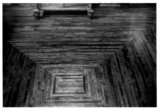
Show NPS Form 10-900-a (3-82) OMB N'O . Expires 1024-0018 10-31-87 United States Department of the Interior National Park Service National Register of Historic Places Inventory Nomination Form Loofbourow House Continuation sheet Carbon County, Utah_______Item number 8____________Page 2 This house is one of the Loofbourow's two principal residences in Price. They lived there from 1911 until 1918, then in 1921 had a bungalow constructed one block away at 205 N. Carbon Avenue, where they lived until at least 1930. Their married daughter, Ruth Southworth, purchased that home from them at that time, though it is possible that they continued to live there with her after that. While living in that house James W. Loofbourow was elected mayor of Price, serving one two year term, 1924-25. Of these two Loofbourow houses, the bungalow on Carbon Avenue is more closely associated with Mr. Loofbourow's significant contributions in the community. He lived in that house for a slightly longer period, and while living there he served as mayor. The Loofbourow House is architecturally unique in Price, and it is one of the few large, elaborate houses constructed in the city during the early twentieth century. Only two other well preserved houses of similar size and vintage have been identified in the community, and neither of them exhibit the degree of both interior and exterior architectural quality found on the Loofbourow House. One of those houses, the Moynier House, was determined eligible for the National Register in 1982. Unlike the eclectic styling of the Loofbourow House, the Moynier House is a straightforward example of the Box Style. Similarities between the two houses include their construction dates, their two-story box-like form, and the narrow horizontal siding on their exteriors. The vast majority of houses in Price are one-story bungalows or pyramid cottages constructed during the early years of the twentieth century. 7 In addition to substantial residences such as the Loofbourow and Moynier houses, a number of important commercial and public buildings were constructed in Price during the period around 1910. They include the Price Carnegie Library, the Carbon Stake Tabernacle of the LDS church, the Carbon County Courthouse, the Weeter-Parker/Mahleres-Siampenos Building (National Register 1982), and the Hellenic Orthodox Church (National Register 1973). The growth and vitality of the community at that time can be attributed to the robust local coal industry, which has served as the primary economic force in Price and Carbon County for the past century. TEastern Utah Advocate, February 9, 1911, p. 5; March 23, 1911, p. 5. 2Carbon County News, May 26, 1911, p. 8. ^Eastern Utah Advocate, September 7, 1911, p. 5. 4 Ibid. 5The Sun-Advocate, January 24, 1946, Sec. 2, p. 1. 6 Ibid. |