| OCR Text |
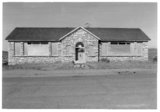
Show Street Address:_______________________________________Site No: Architect/Builder. Frank J. Jackson/Frank J. Jackson ^ o in o CC < Building Materials: stone ________________ Building Type/Style:Vernac.ular Description of physical appearance & significant architectural features: (Include additions, alterations, ancillary structures, and landscaping if applicable) This is a narrow one-story building that is constructed of rock-faced ashlar. The plan is rectangular and the principal facade is symmetrically arranged. There is a sharply pitched gable roof and a centrally located front entrance portico. The main door is flanked by small windows and topped by an elaborate decorative arch and a sunburst wooden inset panel. A stone is found in the portico gable that contains the name, "Modena," and the date of the building's construction, 1936, is carried into the keystone of the arch. The building is boarded up and vacant, but remains in excellent original condition. Statement of Historical Significance: Construction Date: 1935-36 Built in 1935-36, the Modena Elementary School is part of the Public Works Buildings Thematic Resources nomination and is significant because it helps document the impact of New Deal programs in Utah, which was one of the states that the Great Depression of the 1930s most severely affected. In 1933 Utah had an unemployment rate of 36 percent, the fourth highest in the country, and for the period 1932-1940 Utah's unemployment rate averaged 25 percent. Because the depression hit Utah so hard, federal programs were extensive in the state. Overall, per capita federal spending in Utah during the 1930s was 9th among the 48 states, and the percentage of workers on federal work projects was far above the national average. Building programs were of great importance. During the 1930s virtually every public building constructed in Utah, including county courthouses, city halls, fire stations, national guard armories, public school buildings, and a variety of others, were built under federal programs by one of several agencies, including the Civil Works Administration (CWA), the Federal Emergency Relief Administration (FERA), the National Youth Administration (NYA), the Works Progress Administration (WPA), or the Public Works Administration (PWA), and almost without exception none of the buildings would have been built when they were without the assistance of the federal government. The Modena Elementary School is one of 233 public works buildings identified in Utah that were built during the 1930s and early 1940s. Only 130 of those 233 buildings are known to remain today and retain their historic integrity. Of the 233, 107 were public school buildings; 55 of which remain. This is one of 43 elementary schools built, 19 of which remain. In Iron County 7 buildings were constructed; 3 of them are left. This school building was constructed between 1935 and 1936 as a Works Progress Administration (WPA) project at a cost of $5,377. Construction began in October 1935 and was completed in March 1936. The architect was Frank J. (See Continuation Sheet) |