| OCR Text |
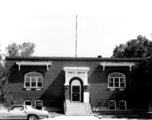
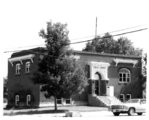
Show Street Address:_________________________________________Site No: cc o uJ Architect/Builder: ... _ TT . , . / , Isaac L. Wright /unknown Building Materials: „ _ . . ___ _________Masonry - Brick ------------------------ Building Type/Style: Classical , .-_.-. „ Revival influence Description of physical appearance & significant architectural features: (Include additions, alterations, ancillary structures, and landscaping if applicable) The Panguitch Carnegie Library is a one story rectangular brick building with a raised basement and a flat roof. It was designed in no particular style, but the balance of the decorative elements and openings on the facade, and the suggestion of a classical portico in the frontispiece of the entrance give it a slightly classical flavor. The facade is symmetrical, with a raised entrance centered between two bands of windows. There are three panels per window band, and each band has a transom with an eliptical upper edge. Each transom is accented by squares of stick work. Above the windows are decorative ledges supported by brackets. Below the windows are pairs of double hung sash basement windows. An arch motif links the openings on the facade. The transom over the entrance is arched, as is the opening of the frontispiece, the transoms over the large front windows, and the contrasting dark brick relieving arches of the large front and basement windows. The most prominent feature on the facade is the brick and frame frontispiece at the entrance. Brick piers frame the entrance and are topped by truncated frame piers and an entablature with dentils under the cornice. (See continuation sheet) 5 Statement of Historical Significance.... •*> ^ Construction Date: Built c. 19T8, trie Fanguitcn Carnegie Library is significant as one of sixteen remaining Carnegie libraries of the twenty-three built in Utah. Thirteen of the sixteen library buildings maintain their original integrity and are included in the Carnegie Library Thematic Resource Nomination. In addition to making significant contributions to public education in their respective communities, these libraries are Utah's representatives of the important nation-wide Carnegie library program, and they document its unparalleled effect in the establishment of community-supported, free public libraries in Utah. The Panguitch Carnegie Library was built c. 1918 with a $6,000 grant from millionaire/philanthropist Andrew Carnegie. Carnegie funded the construction of over 1650 library buildings in the U.S., 23 of which were built in Utah communities. The conditions upon which all Carnegie grants were given were that the recipient community donate the building site and provide an annual maintenance budget of at least 10% of the grant amount. The Panguitch Carnegie Library was one of the smallest of the Carnegie libraries built in the state. The $6000 grant received by the town was much less than the $10,000 or more that was given to 17 of the 23 Utah towns that built Carnegie libraries. Parowan also received $6000, and Tooele received only $5000. The property upon which the library was built was purchased by the city in February 1916, soon after the city received the Carnegie grant. 1 Architect of the building was probably Isaac L. Wright of Richfield, 2 who worked in the Richfield area from about 1912 to 1919. 3 The library building was evidently completed in 1918, as indicated by the minutes of the city council meeting of May 22, 1918 in which the lighting and furnishing of the building was discussed. (See continuation sheet) |