| OCR Text |
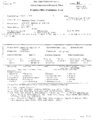
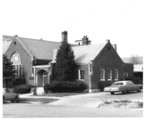
Show \ Street Address: 268 West 100 South , / ffffi______________ Architect/Builder: Building Materials: » * ,*£> ^o Site No:_____^ \_ "^ /.E. Chytraus brick \ Building Type/Style: Description of physical appearance & significant architectural features: (Include additions, alterations, ancillary structures, and landscaping if applicable) The church is a one-story brick building of Late Gothic Revival style. It features pointed Gothic windows with tracery of cast stone. This church makes an interesting contrast with the Buddhist Church across the street^ which was built in the same year, but attempted to show its ethnic identity by applying oriental motifs to an otherwise unchurch-like structure. The Japanese Christian Church with its Gothic style, corresponds to the mid-19th Century concept that "Gothic is the only Christian style." The building is unaltered and is in good condition. -j ^ P. '£ statement of Historical Significance: Construction Date: The Japanese Church of Christ is significant as oneof the few remaining sites to have been continuously associated with ethnic minorities in Utah. In 1884 the Japanese government lifted its ban on the immigration of its people and Japanese people began to migrate to other countries. The first Japanese came to Utah in the late 1880s and found employment mainly as railroad.laborers. In 1900 there were ^17 Japanese immigrants in Utah, :.l- women" and If06 men. By 1910 the number had increased to about 2,000, and by 1920 to nearly 3,000. Throughout the United States the new arrivals met v/ith prejudice and discrimination. Besides being called "unhygienic shack duellers," and "poor workers, 11 they were seen as incapable of becoming good citiz-ens and thus posing a threat to- American democracy. To combat the hostility they met incoming Japanese immigrants developed a rich and close community life. At the center of the Japanese community was the church. Although predominantly Buddhist, Japanese communities included a substantial number of immigrants who had been converted to Christianity in Japan, and increasing numbers were' converted to Christianity following their arrival here. The first Japanese Christian organization in the United States was founded in San Francisco in 1877. It was an independent organization, una.ffilia.ted with any Christian church. In the 1880s various churches, most actively the Methodists and the Presbyterians, established missions for the Japanese in San Francisco. In Salt Lake City the Japanese Christian Church was established in October, 1918, through the cooperative efforts of the Japanese Presbyterian and Congregational Churches of the Pacific Coast. Reverend M. Kobayashi was sent by the board on October 3 to make )roD3rations for the establishment of the church, and Reverend H. Toyatorae, :;W first minister of the church, arrived on October 5. Officers were -looted and evangelizing work was encouraged to recruit Japanese Christians ',.o join the nev/ly established church. The preaching field included not |