| OCR Text |
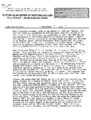
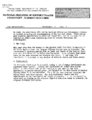
Show FHR-8-300A (11/78) UNITED STATES DEPARTMENT OF THE INTERIOR HERITAGE CONSERVATION AND RECREATION SERVICE NATIONAL REGISTER OF HISTORIC PLACES INVENTORY -- NOMINATION FORM CONTI NUATION SHEET ITEM NUMBER PAGE Other historians, however, refer to the fallacy or "folklore" (Marston 1969) that Fort Uinta was constructed in 1831 and insist that the inscription in fact refers to Fort Uintah which was established in 1837. The 1831 date for the construction of Fort Uintah appears to be based on two facts: Carson's 1833 meeting of Robidoux somewhere in the Uinta Basin (probably near the mouth of the Duchesne River); and the inscription "Denis Julien 1831" on a rock a few miles below Whiterocks, Utah, confirmed site of Fort Uintah. However, there are no published references to Fort Uintah which pre-date 1837. It is entirely possible that Fort Uintah did not exist before that date. What of the word "Wi(y)te" in the inscription? The case for "Winty" runs as follows: First note that the sandstone is spalled and cracked around the "y", making positive identification of the letter difficult. Secondly, note that Robidoux used the French ('Vert") when referring to the Green River; logically, he should have used the French (Blanc) when referring to the White. Robidoux was an educated man, from one of the best families in St. Louis. He spoke at least three languages. He was not an illiterate. Perhaps most persuasive is the accent over the final "e". If Robidoux was using the English word "white", even if he spelled if "wiyte", it is unlikely that he would have spelled or pronounced it "why-tay", which is the pronunciation implied by the accented "e". The accent over the "e" would be more reasonable if the word was "winte" (win-tay) or Winty: the Uintah. This suggests that Fort Uintah was not built until 1837 or 1838 and that, until that time, other smaller posts served the Uintah Basin. However, the notion that Fort Uintah was built in 1831 still prevails and this argues strongly for a reading of "White" rather than "Winty'. On some maps the Green River crossing near present-day Ouray (and near the confluence of the Green, White and Duchesne Rivers) is marked as "Fort Robidoux", which may indicate that Robidoux upgraded Kit Carson's winter quarters there sometime after 1837. Ihe ruins of an old adobe fort at that location also support such a reading (Kelly 1935, 1946,1947; Stewart 1967). Stewart feels that the adobe fort on the Green is the one in the inscription, but that it was abandoned after one season because of flooding and that the fort near Whiterocks was built soon after. It should be noted too that the adobe fort described by Stewart (1967) fits the inscription whether it reads "White" or "Winty". Although the main river joining the Green from the west is now called the Duchesne for its entire length, to the mountain men the Duchesne was the tributary stream and the Uinta was the main channel. Thus, for Carson, Robidoux and others, the Winty, not the Duchesne, emptied into the Green. |