| OCR Text |
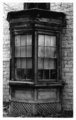
Show 7. Description Condition Y excellent good fair deteriorated ruins unexposed Check one ^'unaltered altered Cheplfone original site moved date Describe the present and original (iff known) physical appearance The Greaves-Deakin house is a two-story stone "modified temple" vernacular house type. The type grows out of a Greek Revival attempt to create a gable-facade home patterned after classical temples. Surfacing in the early 1800s the "temple form" homes had the main front door on the central gable facade which was often flanked by side wings. 1 As the house moved into the midwest around mid-century, the front door increasingly was found on the side wing; this variant has come to be called a "modified temple house."2 The modifed temple house has a "T" plan, with the "T" lying on its side. Though inspired by Greek thinking, the Greaves-Deakin house is composed primarily of Gothic Revival stylistic features. The central gable facade axis of the house is two rooms deep and really 21/2 stories high. This section contains a frame segmented bay window on the first floor and gingerbread scroll-cut bargeboards crested by a finial. The side wing is two stories high and has a two-over-two piercing pattern. The tops of the upstairs openings break the eaves slightly and are gabled. The bargeboards and finial pattern here follows the example of the main gable. A hipped porch covers the side front door. While the vertical proportions and principle decorative features of the house reflect Gothic stylistic concerns, the pedimented wooden window heads represent a continued regard for classical motifs. On the inside the Greaves-Deakin house is well preserved and retains much of its original painted woodwork and wallpaper. The first floor door frames and window mouldings are wood grained walnut. The ceiling in the front bay has a hand painted rosette. Each of the rooms on the first floor contain large fireplaces. The fireplace openings are sealed with wooden panels which at one time were painted with elaborate floral designs. This elaborate painting remains intact in the back room on the south - extending up the wall to the ceiling. The mantle in this room is painted to resemble white marble. Upper rooms reflect a similar state of preservation. Doors are painted in hushed Victorian tones - greys, pinks, and blues. Double doors lead out onto balconies which once graced both the front porch and bay window. T Talbot Hamblin, Greek Revival Architecture in Amer ica (London: Oxford University Press, 1944J, p. 25$," 2 Henry Glassie, Pattern in the Material;Folk Culturei of^ the Eastern. United States (Philadelphia! University of PeiSysl vania Press, 1968), ppTTZ4-133. |