| OCR Text |
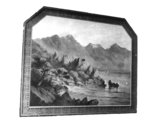
Show PERIOD (Check One or More as Appropriate) | | Q Pre-Columbian! II 16th Century 18th Century 15th Century D 17th Century 19th Century 20th Century SPECIFIC DATE(S) (If Applicable and Known) AREAS OF SIGNIFICANCE (Check One or More as Appropriate) Abor iginal |~~| Prehistoric (~~1 Historic Q Education [ | Engineering [ | Political || Urban Planning Q Religion/Phi- D Other (Specify.) Science Q Industry losophy f~l Agriculture Q Invention Q 1X1 Architecture [~~1 Landscape | | Sculpture Iffl Art I | Social/Human- | Commerce [~1 Communications O Military Q Theater (~| | Transportation | Q j~| Conservation Architecture Literature Music itarian | STATEMENT OF SIGNIFICANCE co Z o u DC: LLI LJ The William H. Culmer home was built in 1881. William and his brothers, George and Henry, immigrated with their parents from England to America in 1867. A year later they arrived in Utah. While still a boy in England, William became good friends with Charles Dickens. In the last years of his life, William Culmer wrote an account of his life as "one of the Dickens Boys." This account was published in 1970 under the title Billy the Cartwheeler. In Utah, the Culmer brothers organized their own firm, G.F, Culmer and Brothers, and were successful in several areas: Wholesale and retail distribution of paints, oils, varnishes, window and art glass, manufacturers of mirrors and show cases; workers in art and stained glass, and manufacturers of galvanized iron work. In addition, they were officers and managers of the Wasatch Asphaltum Company which paved many of Salt Lake City's streets; The Wasatch Marble Quarries, The Mountain Stone Quarries, and The Kyune Sandstone Quarry which produced the stone for several of Utah's important historic sites including the Salt Lake City and County Building, the Cathedral of the Madeleine, and the First Church of Christ Scientist building in Salt Lake City, William Culmer died in 1939 at the age of 87. During the period of much of Utah's industrial development, he and his brothers played an important part. Despite the importance of William Culmer the significance of his home is that it is a prime example of Victorian architecture and, most important, the art work inside the home was executed by his nationally known brother Henry Culmer. Henry Culmer found the painting of Seccos and stencil work to be a relaxing weekend pastime. (A description of these paintings are found in section 7.) The Culmer Home also represents a distinct period in Utah history. Built in 1881, it represents an intermediate period of luxury home construction. It was built between the earlier Beehive House and Deveraux House, built by the ecclesiastical and economic leaders of the Mormon community, and the later period of mining magnate mansions at the turn of the century built primarily by non Mormons. Though somewhat more modest than either the early Mormon mansions or later mining mansions, the Culmer home was built for one of Utah's most prosperous businessmen at a time when the polygamy issue hampered this kind of construction for most of Utah's devout Mormons and at a time when the mining industry was still in its infant stage. |