| OCR Text |
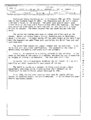
Show PERIOD (Check One or More as Appropriate) Pre-Columbian | | 16th Century | | 18th Century 15th Century Q 17th Century Q 19th Century SPECIFIC DATE(S) (If Applicable end Known) Abor iginal u ID a: LLJ HI 1 Education II Political Prehistoric | | Engineering | Religion/Phi- | Historic | | Industry Q Agriculture | | Invention | Art D Commerce | | Communications | | Literature || Conservation I I Military £] Theater Music | Transportation STATEMENT OF SIGNIFICANCE o In (Check One or More as Appropriate) AREAS OF SIGNIFICANCE | Landscape Architecture losophy Science Sculpture [ | | 20th Century Social/Humanitarian a n n n Urban Planning Other (Specify) HUtnry n a n n [ | (Include Personages, Dates, Events, Etc.) Washington County, like most of Utah, was colonized by Mormon settlers Public life centered around the church and church leadership. Several fine public buildings, constructed In St. George, still remain today. One of these, the old Washington County Courthouse, is distinctive. It was the first, in fact the only, major public edifice built in Washington County during Utah's Territorial perfod that was strictly a "citizen of Utah" effort. It was financed by tax assessment, usually in "kind or labor," rather than by tithing or church donations. St. George was settled late in the year 1861. In 1863, the county seat was moved from the town of Washington to St. George. The court consisted of Judge James D. McCullough and Selectmen, Robert D. Covington, Jacob Gates, and Annon P. Winsor. James S, Bleak was appointed probate and county clerk. They first met in September 1863 to organize. Their next meeting was September 4, 1865. In November 1866 plans were approved to build a basement for a courthouse in St. George. An appropriation of $560,00 was made, to be expended by Judge McCullough. Excavation on the basement got underway. The following August 1867 a tax of 1/4 of one percent to raise $10,000 was discussed. A public vote approved the action. In September 1869 the tax was increased to 3/4 of one percent by public vote. The court approved $1,500 and assigned Jacob Gates to supervise the construction. The building was completed and accepted by the county in 18?6. Raising revenue in a barter economy was difficult. At a special session the "Court," in October 1869, set the following prices for goods: molasses, $1.25 per gallon; corn, $1.50 per bushel; cotton yard, $2.50 per bunch; flour, $8.00 per cwt. in most instances men working on the building paid their taxes in kind, received 3 dollar wage, but were paid in kind. Disbursement prices of tax items re^fject a good profit to the county: molasses, $2,00 per gallon; corn, $2.00 per bushel; cotton yard, $5.00 per bunch; and flour, $10.00 per cwt. But the citizens of Washington County persisted and constructed an impressive courthouse that served the county well until as late as I960. Their story is even more significant when it is realized that these same people, through the Mormon Church, were also building both their Mormon Temple and Tabernacle during the same period of time. All three of these projects were a kind of public works effort to shore up the sagging economy of southwestern Utah. They represented the skilled craftsmanship of those pfoneers. |