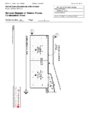
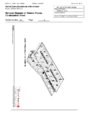
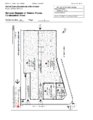
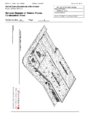
| OCR Text |
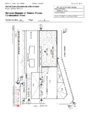
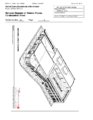
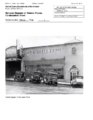
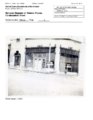
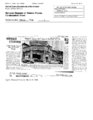
Show Statement of Significance Summary Paragraph (Provide a summary paragraph that includes level of significance and applicable criteria.) The Ben Lomond Hotel Garage, built in 1929, and located in Ogden, Utah, is locally significant under both Criterion A and C, with a period of significance dating from 1929-1966. It is historically significant under Criterion A in the areas of transportation and commerce for its association with the twentieth-century growth and expansion of Ogden City and the development of the automobile industry during that time. The Ben Lomond Hotel Garage was developed by one of the leading entrepreneurs of early Ogden, A.P. Bigelow, and was originally built, in part, to house vehicles for guests of the Ben Lomond Hotel (originally known as the Hotel Bigelow), the largest and most luxurious hotel in the city at the time. Along with the parking storage it also contained street-front commercial retail space that housed a variety of automobilerelated businesses, as well as other business not automobile-related. These businesses kept the building occupied through the Great Depression and beyond. The Ben Lomond Hotel Garage is also architecturally significant under Criterion C as the largest early parking garage constructed in Ogden. The building was the largest and most advertised structure for automobile storage and service in Ogden. Prior to its construction, there were two other garages used for public automobile storage and service in the city, the Mack-Robinson Garage, and the Utah-Idaho Motor Company. The larger of the two, the Mack-Robinson had a capacity of 190 automobiles. In contrast, the Ben Lomond Hotel Garage was built with the capacity for over 200 automobiles, housed several ramps to move automobiles to different parking levels and advertised such amenities as "Ogden's only fireproof garage," 1 "Steam Heated," 2 and "Fully Insured." 3 The building is also architecturally significant under Criterion C. Designed in the Spanish Colonial Revival style, it is a unique example of the versatility of design by the noted architectural firm, Hodgson and McClenahan, which was the most ubiquitous firm in Ogden at the time. 4 The north and northwest facades incorporate the classic characteristics of the Spanish Colonial Revival style: smooth plaster walls and cast concrete ornaments that surround the large windows. The west façade is primarily designed in a nondescript Commercial style. Furthermore, the Ben Lomond Hotel Garage is significant as the only extant example of an enclosed parking structure typical of the time in Ogden City. Early automobiles were not very weather resistant and it was best for them to be completely protected from the weather. Early enclosed garages commonly had facades adorned with architectural ornamentation, and design in the Spanish Colonial Revival style supported this unique appearance. 5 However, by mid-century, open-air garages became more common and the era of completely enclosed structures ended. Lastly, the interior of the building contains several ramps to transfer cars to different levels of the structure, which was a new concept at the time. To date, in spite of some minor renovation, the Ben Lomond Hotel Garage retains its architectural integrity and is the only large automobile storage and service garage from the early Depression era in Ogden City. _________________________________________________________________________________________________ Narrative Statement of Significance (Provide at least one paragraph for each area of significance.) Historical Background Ogden was settled in 1847 by Mormon settlers sent by Brigham Young. The town remained mostly rural until the completion of the transcontinental railroad at Promontory, Utah, in 1869, just northwest of Ogden. From the 1870s Ogden, nicknamed the "Junction City," was a major railroad town, with nine rail systems eventually having terminals in the city. The growth of the railroad spurred the growth of commercial life in Ogden and business exploded around the train station as well as residential areas across the valley. 1 The Ogden Standard (Ogden, Utah), January, 1932, Classifieds, retrieved April 21, 2012 from newspaperarchive.com. The Ogden Standard (Ogden, Utah), January, 1935, Classifieds, retrieved April 21, 2012 from newspaperarchive.com. 3 The Ogden Standard (Ogden, Utah), January, 1932, Classifieds, retrieved April 21, 2012 from newspaperarchive.com. 4 Most of the work produced by the firm was either in the Art Deco or Prairie School styles. 5 Swope, C. (December 2009), The fascinating history of parking: it's the untold chapter of America's love affair with its cars, retrieved April 21, 2012 from http://www.governing.com/columns/urban-notebook/The-Fascinating-History-of.html. 2 8 |