| OCR Text |
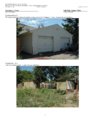
Show United States Department of the Interior National Park Service / National Register of Historic Places Registration Form NPS Form 10-900 OMB No. 1024-0018 (Expires 5/31/2012) Crossgrove House Salt Lake County, Utah Name of Property County and State Narrative Description (Describe the historic and current physical appearance of the property. Explain contributing and noncontributing resources if necessary. Begin with a summary paragraph that briefly describes the general characteristics of the property, such as its location, setting, size, and significant features.) Summary Paragraph The Crossgrove House, constructed circa 1885, is a two-story, brick house located at 12736 S. Boulter Street (1480 East) in Draper, Utah. The Victorian-era house is classically symmetrical with a nearly full-width neo-classical front porch. In 1910, a one-story brick wing was added to the rear, giving the house an L-shaped floor plan. The front porch and two enclosed porches were added in 1930, one of which was demolished when an attached garage was added to the rear in the 1960s. A main floor furnace room was added to the north side of the house in 1945. The furnace room and garage was covered with white aluminum siding (circa 1980s). The Crossgrove House is located on a 0.71-acre parcel. There are two non-contributing chicken coops and a non-contributing tree house at the rear of the property. The neighborhood is a mix of settlement-era homes on large lots, open fields, and newer subdivisions. The Crossgrove House is in good condition and is a contributing historic resource in Draper, Utah. ________________________________________________________________________________________________________________________ Narrative Description The front of the Crossgrove House sits on a granite foundation that was encapsulated in sandstone in the 1960s. Sandstone was also used to cover the front porch deck at the same time. The walls of the house were lined with adobe and faced with a fired brick. The brick is laid in American (common) bond with headers every sixth course. The mortar joints are flush. The brick was painted white around the time the one-story rear addition was added (circa 1910). The roof is covered in asphalt shingles (circa 1970s). The ridgeline of the original house is parallel to the street. There is a hipped roof over the one-story addition and a simple gable over the two-car garage (built in the 1960s) in the rear. The façade (east elevation) is divided into three bays with the main entrance flanked by two windows. The four-panel fanlight door dates from the 1930s. The transom with a segmental rowlock brick arched hood is original. The main floor façade windows were replaced (early 1980s), but retain the segmental brick hoods. The circa 1930 front porch features four tapered box columns and two engaged columns that are stylistically neo-classical. The porch roof is a flat balcony deck with wide eaves. The porch originally had a wood balustrade that was replaced with wrought-iron, circa 1982. On the upper level, the two windows are one-over-one double-hung replacements. The wood lintels and sills are original. The center bay was originally a door to the balcony. The opening was filled with brick and glass block in 1958. The south elevation of the original two-story portion features brick to the apex of the gable. There is a single window on each level, which is a replacement similar to the façade windows. On the west half of the south elevation, a screenedporch built in the 1930s is tucked into the crook of the circa 1910 addition. The north elevation of the two-story portion was originally identical to the south elevation. In 1945, a simple-gable one-story structure was built on the north elevation to house the furnace. The structure has a door facing west, but no direct access to the inside of the original house. There is a pair of six-over-one wood sash windows on the north and east elevations. 1 The later brick chimney on the north elevation is unpainted inside the furnace room. The wood siding of the furnace room addition was covered with aluminum siding in the 1980s. The brick of the one-story addition is visible on the north elevation. The north elevation of the addition features one double-hung narrow window and a later (circa 1960s) aluminum slider. The west (rear) elevation of the original house is obscured by the circa 1910 addition, but two windows are visible on the upper level. There are two square windows on the main level. There is an enclosed breezeway connecting the rear of the house and the two-car garage at the rear. The garage is a simple-gable structure with the garage doors facing west. It was also covered with aluminum siding in the 1980s, but the two panel garage doors are original. 1 These windows appear to be older that 1945 and may have been salvaged from another house. 3 |