| OCR Text |
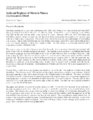
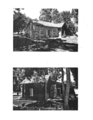
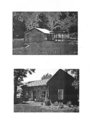
Show OMB No. 1024-0016, NPS Form United States Department of the Interior National Park Service National Register of Historic Places Continuation Sheet Section No. §. Page 1 Muir House, Mendon, Cache County, UT Narrative Statement of Significance The Muir House, built in 1869 and expanded circa 1885 and circa 1935, is locally significant under Criterion A for its association with the development of the Mendon community from a pioneer outpost into the first half of the twentieth century. The period of significance spans from 1869 to 1888. It was during this period that Mary, the mother of the Muir family which settled in Mendon, and Walter, her son who constructed the house, occupied the house. Mary Muir was a pioneer who brought her six children to Utah in 1866. She made a modest living as a nurse and mid-wife in the community. The house was built by her son, Walter Muir, Jr., who also lived here with his family until shortly after Mary's death. Both of these family members are associated with the early settlement of Mendon. The house was later occupied by her daughter, Jane Muir, and the family of Jane's son, George. The Muir family was part of the Mendon agricultural economy, engaging in farming and dairy production, and made significant contributions to the founding and early historical development of Mendon in those areas. The house is also significant under Criterion C as a well-preserved example of, and one of only a few remaining, stone houses in Mendon. Stone was one of the most important building materials in the early settlement of Mendon, but few stone buildings have survived to the present t:ime. The modest stone Muir House represents the type of dwellings used in early era Mendon and is a contributing resource in the community. History of Mendon The community of Mendon was settled in 1859 more than a decade after the arrival of members of the Church of Jesus Christ of Latter-day Saints (LDS or Mormon Church) to the Salt Lake Valley in 184 7, and about the same time as other settlements in the Cache Valley. Before that time, Native American Shoshoni used the valley for hunting and camping. Fur trappers were also frequent visitors to the area. Mendon is located eight miles west of Logan and five miles north of Wellsville, on the foothills of the Wellsville Mountains. Although Monnon settlers brought cattle to the area in 1855 and William Gardner built a cabin on the banks of Gardner's Creek, the settlement was not built until the spring of 1859, when several families, mostly immigrants from England, Scotland and Denmark, moved from the Salt Lake Va11ey to built cabins and a fort along present day Center Street. On December 19, 1989, the Mendon Ward of the LDS Church was organized by church leaders Orson Hyde and Ezra Benson, who named the community after his Massachusetts birthplace. A pine log school/meetinghouse was built in 1860 and a post office established in 1861 (both demolished). On October 29, 1863, county surveyor, James Martineau drew the first town site plat, laid out in nine square blocks with a central square. Construction was immediately begun on a rock meetinghouse, which was completed on the town square in 1864. The remaining blocks were divided into eight rectangular lots measuring ten by twenty rods. The streets were six rods wide. The Mendon town site followed the "plat of Zion" recommendations espoused by LDS Church leader Brigham Young, which appeared in variations throughout the Intermountain West. Mendon was a typical Mormon settlement, with residences congregated within the town site (for security and socialization) and farm acreage in the outlying areas. Each town lot usually had a single-family dwelling unif01mly set back from the street. Animal shelters and agricultural storage, along with vegetable gardens and orchards, were built at the rear of the 1arge lots. By the mid-1860s, |