| OCR Text |
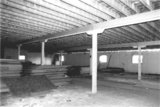
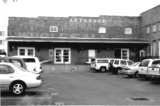
Show United States Department of the Interior National Park Service OMB No. 1024-0018, NPS Form National Register of Historic Places Continuation Sheet Section No. 8 Page 5 ZCMI General Warehouse Salt Lake City, Salt Lake County, UT dozens of turn-of-the-century warehouses in the area. Warehouse is a term for a building type introduced circa 1885 that was relatively expensive because of the structural components, yet simple and undecorated. The few elements that appear decorative, such as the brick pilasters, reflect the structural character of the warehouse rather than any particular style. Warehouses were one of the earliest buildings to stress utility and functional honesty in its architecture. The main elements were structural strength and access to natural light. The strength was largely articulated on the outside by the brick pier, which was an unbroken line from sidewalk to skyline, and served as a pilaster to divide the wall into bays as well as stiffen the walls. It is notable that the design of the ZCMI General Warehouse did not take advantage of existing technology in the use of large banks of multi-pane windows, often called daylight-factory windows. This was probably due to the primary use of the building for shipping and storage. The south side of the building was used mainly for storage and has only small windows. The north side was the primary loading and unloading area and would have been adequately lit by the numerous loading bay doors. The building also has several interior skylights that likely provided a significant amount of lighting to the building interior. Because of the many varied industrial uses, fire protection was an important part of the evolving construction technology of the warehouse. Buildings of fire-resistant heavy timbers and thick brick masonry walls were common for the period. Mill construction, named because it was first applied to the textile mills of New England, consisted of heavy timbers and floors with thick planks. These solid masses could not burn freely and allowed time for fighting the fire. This type of construction avoided concealed spaces between floors and in roofs. Mill construction presented convenient surfaces for attachment of pulleys, shafting and machinery. Heavy timber construction was better than wrought iron, steel, of cast iron, which was shown to buckle and collapse under intense heat. Mill construction was ubiquitous in Salt Lake's commercial and industrial district. In fact, according to a survey taken in 1997, the vast majority of extant contemporary buildings are mill construction.7 Though the ZCMI General Warehouse represents a common method of construction, the interior layout of the building represents a more sophisticated design than what was commonly found in warehouses of the period. Most warehouses were primarily open with loading docks on one elevation. In the ZCMI General Warehouse, the space and flow of movement between spaces was designed around the interior rail dock in the center of the building. The south side of the dock was mainly for storage, while the north became a conduit for moving freight directly from boxcar to wagon. The north end of the building was also used for storage as well as some office space. In the 1997 survey of the warehouse and industrial district, only seven extant buildings had been designed with interior rail spurs and docks. The ZCMI General Warehouse is only one of two built before 1910. The other is the Silver Brothers' Iron Works foundry building located at 700 South and 500 West. The Silver Brothers' building was constructed in 1907 with an iron frame and is currently surrounded by three decades (1950s-1970s) worth of concrete block additions. 7 Salt Lake City Business District Multiple Resource Area, National Register of Historic Places Nomination, draft prepared by author, 1998. |