| OCR Text |
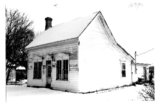
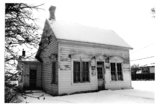
Show 0MB No. 1024-0018, NFS Form United States Department of the Interior National Park Service National Register of Historic Places Continuation Sheet Section No. 8 Page 4 Lemmon, Leander, House, Huntington, Emery County, UT Leander married Disrene Erickson, a daughter of the original settlers, in 1894. The couple had five children, four girls and a boy, so by the time they built this house, in c. 1901, it would have provided welcome room for the expanding family. Although not a large house, it was fairly spacious for the time in this rugged and isolated settlement. However, not many years after the house was constructed Leander died, on October 4, 1907. The house remained in the family until the current owner purchased it. The plan they used for the house, a hall-parlor layout, was the most commonly implemented in Utah up to that time. The hall-parlor plan has ancient beginnings, dating back to perhaps the thirteenth century in England, although the type did not become common until the sixteenth and seventeenth centuries. By then it was found in two forms: as an independent dwelling, and as part of a larger structure that incorporated a service wing from which the hall and parlor was separated by a cross passage. 10 In this early form there was only one floor, and the fireplace was found only in the "hall" or larger room where most of the daily activity in the home occurred. By the time the hall parlor type had diffused to the American colonies, fireplaces with chimneys could be found on both ends of the structure if the formal "parlor" was large enough. A second story, whether a full or half-height room, was also being incorporated into the design at this time. The hall parlor then became popular in many of the settled areas of the country and was transplanted to Utah by Mormon immigrants. Like most other classically inspired architecture from the early settlement period of Utah, the hall parlor is distinguished by symmetrically composed fenestration on the main facade; this is not always the case in other parts of the country. Implementing either three or five bays, the main facade features a centrally placed doorway with one or two windows on either side. The doorWay enters into the main room, or hall. If there is an upper level in the house the staircase is generally placed in the hall with the stairway either open or enclosed with a wall. The space under the stairs was commonly used as closet/storage space. Because of the classical symmetry and ease of expansion (primarily in the form of a lean-to, as in this case, or a cross wing), the hall-parlor plan was quite adaptable and was used into the twentieth century. Commonly constructed of adobe bricks or stone, in later settlements wood frame versions were more common because of the introduction of the railroad to the area and a greater availability of wood, a commodity that had not been in great supply locally. 10 Glassie, Henry H., Folk Housing in Middle Virginia: A Structural Analysis of Historic Artifacts, (Knoxville, TN: University of Tennessee Press, 1979), p.75. |