| OCR Text |
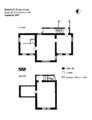
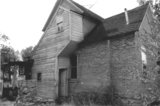
Show United States Department of the Interior National Park Service OMB No. 1024-0018, NFS Form National Register of Historic Places Continuation Sheet Section No. 7 Page 1 Woodruff Stake House, Woodruff, Rich County, UT Narrative Description The Woodruff Stake House, constructed in 1900-1901, is a late example of the temple-form type that was typically constructed in Utah during the 1850s-1870s. The symmetrically composed brick building faces west and features a two-story central section with its gable end facing the street, characteristic of the temple form type, and flanking one-story wings on either side. 1 Despite a few relatively minor alterations to both the exterior and interior, the building retains a significant amount of its historic integrity. True to the classical origins of the temple form type, the building features a symmetrical fagade. Windows are centered in the central gabled section, and the flanking wings contain a mirrored door/window arrangement, though both doors were enclosed in the 1950s after the building was converted to residential use. Other changes likely made at that time include the removal of Victorianstyle porches in front of both one-story sections (see historic photo) and the replacement of the original paired double-hung window on the first-story fagade with a c. 1950s window (though the overall size of the opening has not changed). The open porch on the rear was probably constructed or expanded in the 1950s, given its flat roof and open-rafter construction; its turned columns may have been recycled from the front porches. The foundation of the building is randomly laid fieldstone, and the walls are constructed of locally manufactured brick. Though the Victorian porches are now gone, vestiges of that stylistic influence include the segmental arches over the windows and the latheturned porch columns and single engaged column at the southwest corner that may have supported a sign for the building.2 The interior contains three main rooms on the ground floor corresponding to the three sections visible from the exterior and a room upstairs in the central two-story section. There is also a small "attic" room above the north wing, though inexplicably there is not a matching room above the south wing. The upstairs is accessed by an unusual, enclosed frame stairway attached to the back of the building. This stairway, which is almost certainly original, includes a coal room on the north end of the ground floor under the stairs, accessed only from the exterior. The north wing on the main floor was divided into two rooms in the 1950s or '60s to accommodate a bathroom after the building was converted into a home. Built-in propane heaters were installed in the corners of the rooms at about that same time. The ceiling height and woodwork have been retained on the interior. Those are the only alterations of note to the interior. 1 Thomas Carter and Peter Goss, Utah's Historic Architecture. 33-35. 2 Most IDS Church buildings used for bishop's offices or tithing offices did not carry signs, though some from the early 1900s did feature small identifying stone plaques on the fagade. Examples include tithing offices/bishop's storehouses in Spring City, Fountain Green, Ephraim, Manti, Richmond, and Sandy. See thematic National Register nomination of Mormon Church Tithing Offices and Granaries (1985). |