| OCR Text |
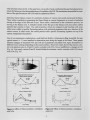
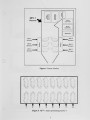
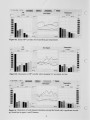
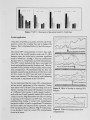
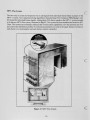
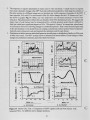
Show with unbumed carbon (LOI). At the same time, our records of post-combustion flue gas fluctuations downstream the flames provided strong indications of correlation with LOI. The mechanisms responsible for correlation of flue gas fluctuations with LOI could be explained as follows. Individual burner flames consist of a multitude of eddies of various sizes inside and around the flame. These eddies contribute to generating the flame flicker at various frequencies as a result of turbulent mixing at the edges of the fuel and air jets. These eddies, transformed in the combustion process, are moving to the furnace exit. A turbulent stream of hot flue gas in the furnace exit area carries carbon particles that continue to burn. The carbon particles which are wrapped in and traveling with some eddies must exhibit a specific fluctuating pattern with statistical parameters that are a function of the carbon content. In other words, the carbon particles add a specific fluctuating signature on top of the random temperature fluctuations. One of our experiments conducted on a coal-fired test facility is illustrated in Fig. la and lb. Several optical sensors A - E were installed in observation ports along the length of the flame. These graphs illustrate changes of measured N O x and LOI and a parameter calculated from signal fluctuations at different burner settings depending on the sensor position. These test results showed that sensors closest to the ignition zone (A, B and C ) tend to correlate with N O x , but are indifferent to changes in L OI (Fig. la). Conversely, sensors D and E, located further downstream, tend to correlate with LOI, but not with N O x (Fig. lb). Combustion Measurements at Different Burner Settings Burner Settings Sensor Positions A.B & C Burner Setting Figure la Effect of Sensor position: correlation with N O x ^ J i B c /n\ IK HH-I Combustion Measurements at Different Burner Settings Burner Settings Sensor Position D & E Burner Setting Figure lb Effect of Sensor position: correlation with LOI 2 |