| Title |
Robert G. Beverly, Grand Junction, Colorado: Utah Uranium Oral History Project |
| Alternative Title |
Robert G. Beverly, Utah Uranium Oral History Project |
| Creator |
Beverly, Robert G. |
| Contributor |
Engle, Clare |
| Date |
1970-07-21 |
| Date Digital |
2016-05-04 |
| Access Rights |
I acknowledge and agree that all information I obtain as a result of accessing any oral history provided by the University of Utah's Marriott Library shall be used only for historical or scholarly or academic research purposes, and not for commercial purposes. I understand that any other use of the materials is not authorized by the University of Utah and may exceed the scope of permission granted to the University of Utah by the interviewer or interviewee. I may request permission for other uses, in writing to Special Collections at the Marriott Library, which the University of Utah may choose grant, in its sole discretion. I agree to defend, indemnify and hold the University of Utah and its Marriott Library harmless for and against any actions or claims that relate to my improper use of materials provided by the University of Utah. |
| Spatial Coverage |
Grand Junction, Mesa County, Colorado, United States |
| Subject |
Uranium miners--Utah--Interviews; Beverly, Robert G.--Interviews; Vanadium industry--United States; Radium--Environmental aspects--United States; Uranium mines and mining--Utah; Uranium mill tailings--Environmental aspects--United States; Radon--Isotopes--Environmental aspects--United States |
| Keywords |
Atomic Energy Commission; National Lead Company; Union Carbide; Radon daughters |
| Description |
Transcript (81 pages) of an interview by Clare Engle with Robert Beverly, on July 21, 1970. From tape number UR-173 in the Utah Uranium Oral History Project |
| Abstract |
Clare Engle interviewed Beverly, a director of radiation and pollution control in the mining and metals division of Union Carbide, in Grand Junction, Colorado. Subjects: personal background, mill processes, Vanadium tailings and mills in the 1950s, effluents, mine safety and regulations, public awareness of hazards, Radon gas levels, workmen's compensation, smoking and lung cancer, silicosis and ventilation, respirators, radium in nature, ecological concerns, reclamation projects, the Arkansas study (81 pages). |
| Type |
Text |
| Format |
application/pdf |
| Extent |
81 pages |
| Language |
eng |
| Rights |
 |
| Rights Holder |
For further information please contact Special Collections, J. Willard Marriott Library, University of Utah at spcreference@lists.utah.edu or (801)581-8863 or 295 South 1500 East, 4th Floor, Salt Lake City, Utah 84112 |
| Scanning Technician |
Mazi Rakhsha |
| Conversion Specifications |
Original scanned with Kirtas 2400 and saved as 400 ppi uncompressed TIFF. PDF generated by Adobe Acrobat Pro X for CONTENTdm display |
| ARK |
ark:/87278/s68s6wwm |
| Topic |
Uranium miners; Uranium mines and mining; Vanadium industry; Uranium mill tailings--Environmental aspects; Radium--Environmental aspects; Radon--Isotopes--Environmental Aspects |
| Genre |
oral histories (literary works) |
| Finding Aid |
http://archiveswest.orbiscascade.org/ark:/80444/xv03439/ |
| Setname |
uum_uoh |
| ID |
1054418 |
| Reference URL |
https://collections.lib.utah.edu/ark:/87278/s68s6wwm |
| Title |
Page 18 |
| Format |
application/pdf |
| Setname |
uum_uoh |
| ID |
1054351 |
| OCR Text |
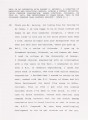
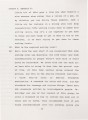
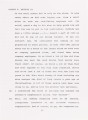
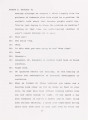
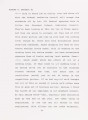
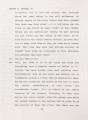
Show ROBERT G. BEVERLY #1 that the AEC officials did have the uranium mills in mind. It appeared to be at first look that they were designed for Oak Ridge or this radiation Hanford. Round work, such as at reactors and U 235 concentration in the uranium mill would meet these regulations or not. So a group, at the same time, National Lead ran a uranium refinery for the AEC back in Fernaldo, Ohio, and had a very sophisticated occupational heal th program and radioactive control program. So a couple of the scientists in this group that worked under Dr. Quigley, very knowledgeable in this field, came out to Monticello, Utah and worked with me and we made one of the early surveys. I think about the same time the AEC HASL group, Heal th and Safely laboratory, hereafter known as the HASSLE group. The HASSLE group had also made a similar study in a mill as we were making in Monticello to try to determine if the airborne ore dust concentrate [contained] enough uranium to be harmful, how about the yellow cake, that's the end of the plant. Well, the early surveys brought out--I'm sorry, am I going in too much detail in this? Interesting information? Well, anyway the surveys brought out that probably the one area in a mill that had to be controlled better than was being controlled in the mills was the 15 |
| Reference URL |
https://collections.lib.utah.edu/ark:/87278/s68s6wwm/1054351 |