| OCR Text |
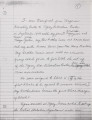
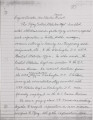
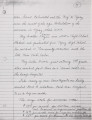
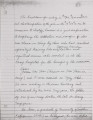
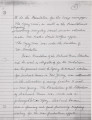
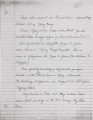
Show estionnaire pS'lt!"e Two William Koohiyama. ~ 8 ~·ihere re you born and where were you raised? I s born on Hay 1 o, 1921 in ·.-rashington, l>.G. Ai'ter the passing of · rrry mother the following year, ley' father and I moved to New York City. 1 father soon found work as a live-in domestic -- a type of employmnt then read.ily available to Japanese ilmnig:rants. He therefore was forced to board me out with family friends. At age six I entered a Catholic boarding school, where I was .f'ri.ghtened by the nuns who wore strange loold.ng black robes. tater, I was admitted to two Protestant inBtitutiona for half-orphan chi.ld.ren. At each 11homa11 I waa the o~ child of color. Signi.f'icantly, If1Y adolescent years coincided with the Great Depression, 1929-39. During that period I lived at the Shel terillg Arms, an ~iscopal Church-related ageney wi tb 1 20 children, then located just across the street from where we presen~ reside • ... 9. Were Japanese custcas practiced in your homa? }ty father told me that before age n.w I spoke in Japanese only. Arter our separation, I spoke only Ehglish. The Japanese I once kDnr was completely erased from rt13' conscious mind. As far as the practice o~ Japanese customs at home, I was too young to remember; am because ot m:r institutional background, I did not have the practical opportunity' nor the inclination or motivation to pursue Japanese customs. In retrospect, while growing up, I subconsiously knew that I was ''difieren~r Therefore, I tried to becCDS 300% American -- in~ by rejecting anything and everything "Japaneae," "Oriental, " or "Asian•" A!J a consequence, I had unf'ortunate d.itrerences with rq father who wanted DB to learn something about Japan, its culture, etc. In otbar words, I was a.shamad of rrf3' Japanese heritage. I adamantly retu.sed to re-learn tbe Japanese language, or read Japanese history, or enm practice Judo, which was then the "in-thing." To whitewash rq Japanese appearance evan further, I attempted to dress more "sharper'' than m:r youthtul ilhi. te peers; tried to excell in sports -- particularly baseball, basketball, swimm:i..ng, track, and ice hockey; and, of course, to "be-with-itn - to dance the I..indy' Big Apple I Shag, am the Pea~. a. Are they practiced nov? To what extent? Only superfici.ally. tle eat rice 3-4 tiDes a week. Fnjar watching Japanese fil.ms on teleTi:Jion. Attend the annual Bon Dance (Buddhist Festival), which in years past lfl3' w1te and two daughters haTe participated as dancersJ as well as attend the annual basaars sporusored by the local Japanese American United Church and the Bnddhi st Church. At least hal.f of the members of the famil.y ha.va takan lessons in the martial arts -- Judo and Karate. And gradual.ly we are reading and studying more about Japan -- but not to the exclusion of other Asian nations and their eul tures. b. How were the children named? (i.e. with Japanese names) At thia point -- I assume you mean the names of my sister and brother, and JJO"Sel£. As far as rq sister and brother are concerned, I know that each bad a given Japanese name. Whether tbey- had &lglish or Christian names too, I'm not at all certain. I ban a Japanese middle D8ID8 -- ~ ~~n~~111:~~~.same as the Germm-AJDerican ( |