| Title |
Charlie F. Pharr, Layton, Utah: an interview by Becky B. Lloyd, September 2, 2006: Saving the Legacy tape no. 766 |
| Alternative Title |
Charlie F. Pharr, Saving the legacy: an oral history of Utah's World War II veterans, ACCN 2070, American West Center, University of Utah |
| Creator |
Pharr, Charlie F., 1930- |
| Contributor |
Lloyd, Becky B.; University of Utah. American West Center |
| Publisher |
Digitized by J. Willard Marriott Library, University of Utah |
| Date |
2006-09-02 |
| Date Digital |
2015-12-16 |
| Access Rights |
I acknowledge and agree that all information I obtain as a result of accessing any oral history provided by the University of Utah's Marriott Library shall be used only for historical or scholarly or academic research purposes, and not for commercial purposes. I understand that any other use of the materials is not authorized by the University of Utah and may exceed the scope of permission granted to the University of Utah by the interviewer or interviewee. I may request permission for other uses, in writing to Special Collections at the Marriott Library, which the University of Utah may choose grant, in its sole discretion. I agree to defend, indemnify and hold the University of Utah and its Marriott Library harmless for and against any actions or claims that relate to my improper use of materials provided by the University of Utah. |
| Spatial Coverage |
Japan; Korea |
| Subject |
Pharr, Charlie F., 1930- --Interviews; Korean War, 1950-1953--Personal narratives, American; Veterans--United States--Biography |
| Description |
Transcript (32 pages) of an interview by Becky B. Lloyd with Charlie F. Pharr on September 2, 2006. From tape number 766 in the"Saving the Legacy" Oral History Project |
| Collection Number and Name |
Accn2070, Saving the Legacy oral history project, 2001-2010 |
| Abstract |
Pharr (b. 1930) quit school in the 8th grade. He joined the army in June 1949 and was assigned to the 4th Signal Battalion. During the Korean conflict he was shipped to Japan, Inchon, and Seoul. Wounded in the Battle at Chosin Reservoir, he was evacuated to Osaka, then returned to the United States. He was discharged in August 1952. He later joined the Air Force and remained there for seventeen years. Interviewed by Becky Lloyd. 32 pages. |
| Type |
Text |
| Genre |
oral histories (literary works) |
| Format |
application/pdf |
| Extent |
32 pages |
| Language |
eng |
| Rights |
 |
| Scanning Technician |
Mazi Rakhsha |
| Conversion Specifications |
Original scanned with Kirtas 2400 and saved as 400 ppi uncompressed TIFF. PDF generated by Adobe Acrobat Pro X for CONTENTdm display |
| ARK |
ark:/87278/s61858mv |
| Topic |
Personal narratives--American; Veterans; Korean War (1950-1953) |
| Setname |
uum_slohp |
| ID |
1035236 |
| Reference URL |
https://collections.lib.utah.edu/ark:/87278/s61858mv |
| Title |
Page 31 |
| Format |
application/pdf |
| Setname |
uum_slohp |
| ID |
1035234 |
| OCR Text |
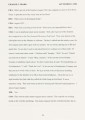
Show H RLI F. PHARR PT B R 2 2006 by a month or so. He got a job in the Post Office down in alt Lak a a mail carri r. when I got out or about a week before, he called me up or was over visiting or something. Anyway he said, "I was in the office the other day and saw your name on a list for a job as a mail handler at the Salt Lake Post Office." I said, "I haven't heard anything." He said, "Well, the guy told me he'd been trying to call you." I said, "Well, if he did, he didn't get the right number or something." So he went in there and told the guy that I was interested. So he sent me a letter and wanted to know if I could go to work that Monday. I was still in the Air Force. So he said, "When do you get out?" I got out on a Friday and went to work at the Post Office on Monday. So I worked down there for thirteen months. Then the people up at Hill called me and wanted to know if I could come to work up there in the instrument shop. I thought that would be a lot better than driving to Salt Lake every day. So I told them I thought I could. So I went down and asked the people at the Post Office if I needed to transfer or quit or whatever I had to do (both were Civil Service jobs). They said, "Oh, we'll just transfer you." So they transferred me to Hill, so I didn't lose any leave time or anything. I worked up there through 1985. I retired the first of January 1986. I've been retired ever since. EDI: He's been playing ever since. BEC: Playing golf, did you say? EDI: Yes. BEC: Well, that's great and it looks like you're in good health. CHA: I try to be. EDI: We still feed him. BEC: That's important. 31 |
| Reference URL |
https://collections.lib.utah.edu/ark:/87278/s61858mv/1035234 |