| Title |
Haven R. Burningham, Bountiful, Utah: an interview by Benjamin Bahlmann, September 26, 2002: Saving the Legacy tape no. 602 |
| Alternative Title |
Haven R. Burningham, Saving the legacy: an oral history of Utah's World War II veterans, ACCN 2070, American West Center, University of Utah |
| Creator |
Burningham, Haven R., 1918-2014 |
| Contributor |
University of Utah. American West Center; Bahlmann, Benjamin J. |
| Publisher |
Digitized by J. Willard Marriott Library, University of Utah |
| Date |
2002-09-26 |
| Date Digital |
2015-12-16 |
| Access Rights |
I acknowledge and agree that all information I obtain as a result of accessing any oral history provided by the University of Utah's Marriott Library shall be used only for historical or scholarly or academic research purposes, and not for commercial purposes. I understand that any other use of the materials is not authorized by the University of Utah and may exceed the scope of permission granted to the University of Utah by the interviewer or interviewee. I may request permission for other uses, in writing to Special Collections at the Marriott Library, which the University of Utah may choose grant, in its sole discretion. I agree to defend, indemnify and hold the University of Utah and its Marriott Library harmless for and against any actions or claims that relate to my improper use of materials provided by the University of Utah. |
| Spatial Coverage |
England, United Kingdom |
| Subject |
Burningham, Haven R., 1918-2014--Interviews; Veterans--Utah--Biography; World War, 1939-1945--Personal narratives, American; World War, 1939-1945--Aerial operations, American; World War, 1939-1945--Campaigns--Europe, Northern--Personal narratives, American; Bomber pilots--Biography |
| Keywords |
Army Air Corps |
| Description |
Transcript (71 pages) of an interview by Benjamin Bahlmann with Haven R. Burningham on September 26, 2002. From tape number 602 in the "Saving the Legacy" Oral History Project |
| Collection Number and Name |
Accn2070, Saving the Legacy oral history project, 2001-2010 |
| Abstract |
Burningham (b. 1918) grew up in Bountiful, Utah. He discusses his family, schooling, the Depression, and his LDS mission to New Zealand from 1937 to 1939. He worked at the Lockheed aircraft factory in California assembling P-38s prior to enlisting in the Army Air Corps in January 1943. He completed primary training in Santa Ana, California, flying Stearmans, then basic training in Lemoore, California, flying BT-13s, before going to Douglas, Arizona, for advanced training. After being trained in B-17s at Roswell, New Mexico, he joined his crew in Sioux City, Iowa. They flew to England to join the 457th, 8th Air Force bomb group stationed in Glatton. He relates his combat flying experiences. After flying thirty missions, he returned to the US in January 1945, where he was assigned as a B-17 instructor. He was discharged after the war ended and stayed in the Reserves until offered a regular commission in the Air Force in 1947, where he spent a total of thirty-two years before retiring. Interviewed by Benjamin J. Bahlmann. 71 pages. |
| Type |
Text |
| Genre |
oral histories (literary works) |
| Format |
application/pdf |
| Extent |
71 pages |
| Language |
eng |
| Rights |
 |
| Scanning Technician |
Mazi Rakhsha |
| Conversion Specifications |
Original scanned with Kirtas 2400 and saved as 400 ppi uncompressed TIFF. PDF generated by Adobe Acrobat Pro X for CONTENTdm display |
| ARK |
ark:/87278/s6c26zjn |
| Topic |
Personal narratives--American; Veterans; World War (1939-1945); Bomber pilots; Military operations, Aerial--American |
| Setname |
uum_slohp |
| ID |
1034729 |
| Reference URL |
https://collections.lib.utah.edu/ark:/87278/s6c26zjn |
| Title |
Page 55 |
| Format |
application/pdf |
| Setname |
uum_slohp |
| ID |
1034711 |
| OCR Text |
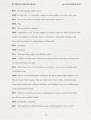
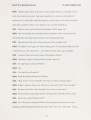
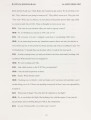
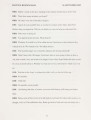
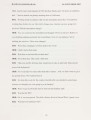
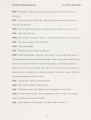
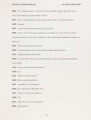
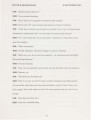
Show H v~ HM 26 P B R 2002 till think ab ut that and I gi credit to those poor guy on th gr und. Th y ju t had it t rrible. I d look down and see those snow field covered hills in the wint rtim and th e guys had probably been out there for a month how can they stand it? How do they do that? I knew that if I got back, I'd have a place to sleep I'd have a hot meal and yet th re w~re those that went for months on the ground. Like the people with Patton, they were out there for a year, two years. BJB: Having served a mission, and then just a few months later, a year or so .. .I guess it was a little longer, I guess, with the wait. .. HRB: It was a tough transition. BJB: At the time, did you ever compare the two? Or was the comparison lost on you? Or did you recognize kind of doing one type of work and then doing another type of work? HRB: I think it was cut to where the mission, I had to forget about, and I had a new mission. I had a different type of mission, a type of, instead of saving, one of killing. Horrible change. BJB: Did that affect you at the time? Or like we were just saying, to see what they've done in return, is it. .. HRB: I'm sure it had an effect on me, but it didn't affect me as far as the work I had to do as a pilot. Didn't bother me that way at all. And sometimes, I remember once a new crew was flying and we parked right across from each other, waiting to take off. For some reason-now we're talking about kids; they were kids compared to me (laughs)-! went over and I said, "Well, it's not so bad. You'll be able to make it and be back." They yelled back-they got shot up pretty bad-but when they came back the pilot came over 54 |
| Reference URL |
https://collections.lib.utah.edu/ark:/87278/s6c26zjn/1034711 |