| Title |
Foster R. Lamb, Holladay, Utah: an interview by Becky B. Lloyd, September 10, 2004: Saving the Legacy tape no. 711 |
| Alternative Title |
Foster R. Lamb, Saving the legacy: an oral history of Utah's World War II veterans, ACCN 2070, American West Center, University of Utah |
| Creator |
Lamb, Foster R., 1924- |
| Contributor |
Lloyd, Becky B.; University of Utah. American West Center |
| Publisher |
Digitized by J. Willard Marriott Library, University of Utah |
| Date |
2004-09-10 |
| Date Digital |
2015-12-16 |
| Access Rights |
I acknowledge and agree that all information I obtain as a result of accessing any oral history provided by the University of Utah's Marriott Library shall be used only for historical or scholarly or academic research purposes, and not for commercial purposes. I understand that any other use of the materials is not authorized by the University of Utah and may exceed the scope of permission granted to the University of Utah by the interviewer or interviewee. I may request permission for other uses, in writing to Special Collections at the Marriott Library, which the University of Utah may choose grant, in its sole discretion. I agree to defend, indemnify and hold the University of Utah and its Marriott Library harmless for and against any actions or claims that relate to my improper use of materials provided by the University of Utah. |
| Spatial Coverage |
England, United Kingdom; France; Germany |
| Subject |
Lamb, Foster R., 1924- --Interviews; Veterans--United States--Biography; World War, 1939-1945--Personal narratives, American; World War, 1939-1945--Military operations, American; World War, 1939-1945--Campaigns--Europe, Northern--Personal narratives, American; World War, 1939-1945--Campaigns--France--Normandy--Personal narratives, American; Germany--History--1945-1955 |
| Keywords |
D-Day; Occupation duty |
| Description |
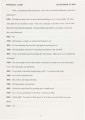
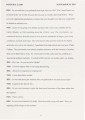
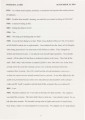
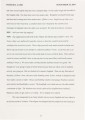
Transcript (21 pages) of an interview by Becky B. Lloyd with Foster R. Lamb on September 10, 2004. From tape number 711 in the "Saving the Legacy" Oral History Project |
| Collection Number and Name |
Accn2070, Saving the Legacy oral history project, 2001-2010 |
| Abstract |
Mr. Lamb was born on January 16, 1924, in Wales, Utah. He discusses his schooling, the family ranch and the Depression. He was drafted in May 1943 and worked repairing sheet metal on aircraft at Hill Air Force Base. He was shipped to England to an Air Corps base near Blackpool where he worked with the 8th and 9th Air Forces. He describes his work and activities relating to the D-Day invasion. He transferred to France until VE Day when he was sent to Erlangen, Germany, for occupation duty. He describes his activities there. He was discharged in March 1946. Mr. Lamb worked for the Federal government with the Bureau of Indian Affairs and the Bureau of Reclamation. Interviewed by Becky Lloyd. 21 pages. |
| Type |
Text |
| Genre |
oral histories (literary works) |
| Format |
application/pdf |
| Extent |
21 pages |
| Language |
eng |
| Rights |
 |
| Scanning Technician |
Mazi Rakhsha |
| Conversion Specifications |
Original scanned with Kirtas 2400 and saved as 400 ppi uncompressed TIFF. PDF generated by Adobe Acrobat Pro X for CONTENTdm display |
| ARK |
ark:/87278/s6bc61m5 |
| Topic |
Personal narratives--American; Veterans; World War (1939-1945) |
| Setname |
uum_slohp |
| ID |
1034403 |
| Reference URL |
https://collections.lib.utah.edu/ark:/87278/s6bc61m5 |
| Title |
Page 12 |
| Format |
application/pdf |
| Setname |
uum_slohp |
| ID |
1034393 |
| OCR Text |
Show FO TER R. LAMB P MB R 10,2004 the shuttle. Around the time ofD-Day I left Warren Base and was ent to an th r ba north of London. BEC: You had been reassigned? FOS: Reassigned, transferred. We just took care of those planes and they were being shot up really bad. The gunners were getting it. They were getting killed. The planes they'd take off. So many planes would take off, but we never knew how many were going to come back. We'd work on them in the night and they'd take them and put them back in the air. They'd take off the next morning. Then on D-Day, that was a big occasion. We didn't ever know what was happening in the Army but we knew something big was happening that day. There were a lot of planes in the air and so on and so forth. About then, the Germans started sending over buzz-bombs. [Editor's note: Buzz-bomb was another name for the notorious German V-1 missile. The V-1 was an unmanned flying bomb. It was, in effect, the first cruise missile. It was powered by a pulse-jet engine which gave it a characteristic burbling sound as it flew. Guidance was crude. V-1 s were simply launched in the direction of a target with an amount of fuel calculated to run out over the target. When the fuel ran out, the engine stopped and the missile fell silently onto its target and detonated its large conventional warhead. Later in the war, the large V-2 rockets, the first rocket-powered ballistic missiles, also began to fall on England. These fell silently onto their targets at supersonic speeds from sub-orbital heights and were impossible to defend against.] When the fuel was expended, the engine cut out and the bomb fell. They were sent over into England. As long as we could hear the buzz bombs coming over, it was okay. But if we heard the motor tum off, look out. It was going to hit. 12 |
| Reference URL |
https://collections.lib.utah.edu/ark:/87278/s6bc61m5/1034393 |