| Title |
Brigham D. Madsen, Salt Lake City, Utah: an interview by Winston Erickson, January 21, 2003: Saving the Legacy tape nos. 546 & 547 |
| Alternative Title |
Brigham D. Madsen, Saving the legacy: an oral history of Utah's World War II veterans, ACCN 2070, American West Center, University of Utah |
| Creator |
Madsen, Brigham D. |
| Contributor |
Erickson, Winston P., 1943-; University of Utah. American West Center |
| Publisher |
Digitized by J. Willard Marriott Library, University of Utah |
| Date |
2003-01-23 |
| Date Digital |
2015-12-16 |
| Access Rights |
I acknowledge and agree that all information I obtain as a result of accessing any oral history provided by the University of Utah's Marriott Library shall be used only for historical or scholarly or academic research purposes, and not for commercial purposes. I understand that any other use of the materials is not authorized by the University of Utah and may exceed the scope of permission granted to the University of Utah by the interviewer or interviewee. I may request permission for other uses, in writing to Special Collections at the Marriott Library, which the University of Utah may choose grant, in its sole discretion. I agree to defend, indemnify and hold the University of Utah and its Marriott Library harmless for and against any actions or claims that relate to my improper use of materials provided by the University of Utah. |
| Spatial Coverage |
Fort Benning, Muscogee County, Georgia, United States; Germany; Pocatello, Bannock County, Idaho, United States |
| Subject |
Madsen, Brigham D.--Interviews; Veterans--Utah--Biography; World War, 1939-1945--Personal narratives, American; Germany--History--1945-1955; Nuremberg Trial of Major German War Criminals, Nuremberg, Germany, 1945-1946--Personal narratives, American; College teachers--Utah--Biography; Historians--Utah--Biography; University of Utah--History |
| Keywords |
Military instructors; Training officers; Historians; Allied occupation of Germany |
| Description |
Transcript (58 pages) of an interview by Winston Erickson with Brigham D. Madsen on January 21, 2003. From tape numbers 546 and 547 in the "Saving the Legacy" Oral History Project |
| Collection Number and Name |
Accn2070, Saving the Legacy oral history project, 2001-2010 |
| Abstract |
Madsen (b. 1914) was born in Magna, Utah. He discusses growing up in the railroad town of Pocatello, Idaho; schooling, family, and the Depression. He attended the University of Utah for two years, completed a LDS mission to the eastern central states and attended graduate school at Berkeley for two years, where he studied history. He was drafted in 1942 and took basic training at Camp Roberts in California. He attended OCS at Fort Benning, Georgia, and upon graduation was assigned as an instructor there. He was sent to Germany at the end of the war for occupation duty. He remained there for eight months, during which time he was assigned as the historian of the Third Army. He returned home in July 1946. Madsen returned to Berkeley to finish his PhD and joined the faculty at Brigham Young University. Later, he taught at Utah State University. He served as assistant director of training for the Peace Corps in Washington, DC, and as training director for VISTA. He returned to Utah as the Dean of the Division of Continuing Education at the University of Utah and served in several other administrative positions including Administrative Vice President, Director of the Marriott Library, and chair of the Department of History. He returned to a full-time faculty position in history before retiring from the University in 1984. Interviewed by Winston Erickson. 58 pages. |
| Type |
Text |
| Genre |
oral histories (literary works) |
| Format |
application/pdf |
| Extent |
58 pages |
| Language |
eng |
| Rights |
 |
| Scanning Technician |
Mazi Rakhsha |
| Conversion Specifications |
Original scanned with Kirtas 2400 and saved as 400 ppi uncompressed TIFF. PDF generated by Adobe Acrobat Pro X for CONTENTdm display |
| ARK |
ark:/87278/s6pc54gb |
| Topic |
Personal narratives--American; Veterans; World War (1939-1945); Nuremberg Trial of Major German War Criminals (Germany : 1945-1946); College teachers; Historians |
| Setname |
uum_slohp |
| ID |
1033940 |
| Reference URL |
https://collections.lib.utah.edu/ark:/87278/s6pc54gb |
| Title |
Page 11 |
| Format |
application/pdf |
| Setname |
uum_slohp |
| ID |
1033891 |
| OCR Text |
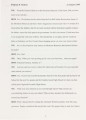
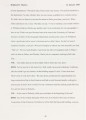
Show Bri ham D. Mad en 21 Janua 2003 You might be interested, J. Golden Kimball s t me apart fi r my mi i n and fiv of us went over one day to the mission home to be set apart and he had us fill our nam out on a card and he got to mine and he says, "Brigham Duane Modsen.' I said ld r Kimball that's not Madsen, that's Madsen. That's not an 'o' , that's an a' ." Then he said "If that's an 'a' I'm cockeyed." I thought I ruined my mission right there (laughs). So I remember him just from that one meeting with him. In my mission in those days, in the summertime we traveled without purse or script to save money. My whole mission only cost me about $600, which was, of course, a lot of money in Depression days. So it was a good experience for me to travel for those four months, my first year, without purse or script. The people of the mountains were used to this. It was the Bible Belt. They were used to ministers going around asking for a place to stay at night and for a meal. We had trouble sometimes. I vowed that I would never sleep out. I never did, although I went once till three o'clock in the morning. If you can imagine knocking on somebody's door at three o'clock in the morning asking for a place to stay, but I did it. I would not sleep out; I vowed I wouldn't. So I had some interesting experiences that way, saved some money and learned to deal with people. After a year there I was made a district president and sent to eastern North Carolina. North Carolina was divided into two sections and I had twelve missionaries to supervise and five branches. The branch presidents were men in their forties and fifties, and here I was twenty years of age and I was their superior. I learned a lot about diplomacy and how to work with people and how to be an administrator, really. It was a good experience for me. WE: So you stayed in the mission field for two years? 10 |
| Reference URL |
https://collections.lib.utah.edu/ark:/87278/s6pc54gb/1033891 |