| Title |
Lael Jay Woodbury, Provo, Utah: an interview by Becky B. Lloyd, April 9, 2005: Saving the Legacy tape no. 722 |
| Alternative Title |
Lael Jay Woodbury, Saving the legacy: an oral history of Utah's World War II veterans, ACCN 2070, American West Center, University of Utah |
| Creator |
Woodbury, Lael J. (Lael Jay), 1927-2013 |
| Contributor |
Lloyd, Becky B.; University of Utah. American West Center |
| Publisher |
Digitized by J. Willard Marriott Library, University of Utah |
| Date |
2005-04-09 |
| Date Digital |
2015-12-16 |
| Access Rights |
I acknowledge and agree that all information I obtain as a result of accessing any oral history provided by the University of Utah's Marriott Library shall be used only for historical or scholarly or academic research purposes, and not for commercial purposes. I understand that any other use of the materials is not authorized by the University of Utah and may exceed the scope of permission granted to the University of Utah by the interviewer or interviewee. I may request permission for other uses, in writing to Special Collections at the Marriott Library, which the University of Utah may choose grant, in its sole discretion. I agree to defend, indemnify and hold the University of Utah and its Marriott Library harmless for and against any actions or claims that relate to my improper use of materials provided by the University of Utah. |
| Subject |
Woodbury, Lael J. (Lael Jay), 1927-2013--Interviews; Veterans--Utah--Biography; World War, 1939-1945--Personal narratives, American; World War, 1939-1945--Naval operations, American; World War, 1939-1945--Campaigns--Pacific Area--Personal narratives, American; World War, 1939-1945--Campaigns--Japan--Okinawa Island--Personal narratives, American |
| Description |
Transcript (57 pages) of an interview by Becky B. Lloyd with Lael Jay Woodbury on April 9, 2005. From tape number 722 in the "Saving the Legacy" Oral History Project |
| Collection Number and Name |
Accn2070, Saving the Legacy oral history project, 2001-2010 |
| Abstract |
Mr. Woodbury was born on July 3, 1927, in Fairfield, Idaho. He discusses his family, childhood and the Depression. His father was an unsuccessful farmer, but had success in several other small businesses in Logan, Utah. Due to Mr. Woodbury's size and appearance, he was able to work his way into the Navy at age 15 (August 1942). Took boot camp in San Diego, California, then additional training at Treasure Island. He was assigned to the Naval Mobile Hospital (MOB3) in Samoa performing seaman duties. Worked up to an electrician's mate 2nd class rating. Performed duty in Samoa for 22 months during which time he contracted elephantitis and was sent to Treasure Island. Following his recovery, he was assigned to the USS Duluth CL-87, a light cruiser that served in the Pacific as part of Task Force 58 (38), part of the 5th Fleet. They traveled to Okinawa in preparation for the invasion of Japan. He participated in the battle in Okinawa where he received a battle star. He describes his experiences there and elsewhere aboard ship. He was recalled home because of his wife's illness and the war ended before he could rejoin his ship. He was sent to the east coast on the USS Tidewater, a destroyer tender and traveled to Guam. He was separated in December 1946. Mr. Woodbury was chair of the Theater Department at Brigham Young University and later served as Dean of the College of Fine Arts and Communication at the same institution. Interviewed by Becky Lloyd. 57 pages. |
| Type |
Text |
| Genre |
oral histories (literary works) |
| Format |
application/pdf |
| Extent |
57 pages |
| Language |
eng |
| Rights |
 |
| Scanning Technician |
Mazi Rakhsha |
| Conversion Specifications |
Original scanned with Kirtas 2400 and saved as 400 ppi uncompressed TIFF. PDF generated by Adobe Acrobat Pro X for CONTENTdm display |
| ARK |
ark:/87278/s61z66gh |
| Topic |
Personal narratives--American; Veterans; World War (1939-1945); Military operations, Naval--American |
| Setname |
uum_slohp |
| ID |
1033379 |
| Reference URL |
https://collections.lib.utah.edu/ark:/87278/s61z66gh |
| Title |
Page 35 |
| Format |
application/pdf |
| Setname |
uum_slohp |
| ID |
1033356 |
| OCR Text |
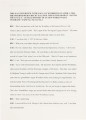
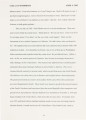
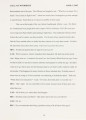
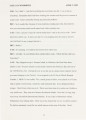
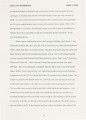
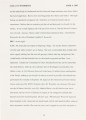
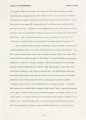
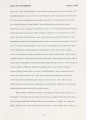
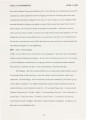
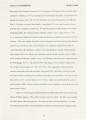
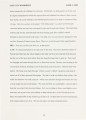
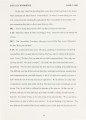
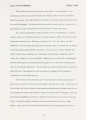
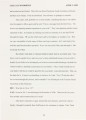
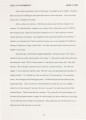
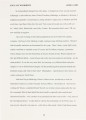
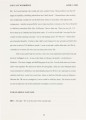
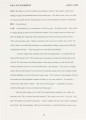
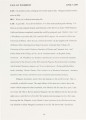
Show LAEL JAY WOODBURY PRIL 9 2005 was to stand between the island of Okinawa and the battle fleet- the r t f th hip . We were interceptors forming the first line of defense between the kamikaze and th major part of the invasion fleet. Therefore we were prime targets. The first of ten kamikaze waves consisted of 303 kamikazes and 432 other aircraft. They created carnage. They sank six ships and damaged twenty-seven others so seriously that they were knocked out of the war. 466 men were killed, 568 men were wounded at that time. However, not one of those 303 kamikazes returned to Japan! In other words, we shot them all down! In other engagements, the USS Laffey DD-724-I've just picked out some examples to point out the ferocity of the terrible, terrible destruction on both sides-the USS Laffey was attacked by twenty-two planes of which eight kamikazes hit it. The USS Laffey was also hit by four bombs. But the ship did not sink. The USS Hugh W Hadley, DD-774 shot down twenty-three of the kamikazes who attacked her, and she too survived. Many others were going down, but I'm citing some of the more heroic events. When the kamikaze campaign finally came to a halt, a sobering total of thirty-four ships-of-the-line, the big ones, were sunk. Thirty-four! 368 other ships were damaged. Over 5,200 US sailors were killed. That's just sailors, not counting the Marines, the Army, and the Air Force. 4,874 were wounded, making Okinawa the bloodiest battle in the history of the US Navy. 110,000 Japanese were killed there. The American flag was raised in victory on Okinawa on June 22, 1945. So the battle lasted for about seven weeks. The atomic bomb was detonated over Hiroshima on August 6, 1945, about five weeks later. 35 |
| Reference URL |
https://collections.lib.utah.edu/ark:/87278/s61z66gh/1033356 |