| Title |
Donald H. Mabey, Salt Lake City, Utah: an interview by Becky B. Lloyd, July 19, 2004: Saving the Legacy tape no. 687 |
| Alternative Title |
Donald H. Mabey, Saving the legacy: an oral history of Utah's World War II veterans, ACCN 2070, American West Center, University of Utah |
| Creator |
Mabey, Donald H., 1922- |
| Contributor |
Lloyd, Becky B.; University of Utah. American West Center |
| Publisher |
Digitized by J. Willard Marriott Library, University of Utah |
| Date |
2004-07-19 |
| Date Digital |
2015-12-16 |
| Access Rights |
I acknowledge and agree that all information I obtain as a result of accessing any oral history provided by the University of Utah's Marriott Library shall be used only for historical or scholarly or academic research purposes, and not for commercial purposes. I understand that any other use of the materials is not authorized by the University of Utah and may exceed the scope of permission granted to the University of Utah by the interviewer or interviewee. I may request permission for other uses, in writing to Special Collections at the Marriott Library, which the University of Utah may choose grant, in its sole discretion. I agree to defend, indemnify and hold the University of Utah and its Marriott Library harmless for and against any actions or claims that relate to my improper use of materials provided by the University of Utah. |
| Spatial Coverage |
Los Alamos, Los Alamos County, New Mexico, United States |
| Subject |
Mabey, Donald H., 1922- --Interviews; Veterans--United States--Biography; World War, 1939-1945--Personal narratives, American; Los Alamos National Laboratory--History |
| Keywords |
Great Depression; Manhattan Project; Atomic bomb; Christensen Diamond Products |
| Description |
Transcript (46 pages) of an interview by Becky B. Lloyd with Donald H. Mabey on July 19, 2004. From tape number 687 in the "Saving the Legacy" Oral History Project |
| Collection Number and Name |
Accn2070, Saving the Legacy oral history project, 2001-2010 |
| Abstract |
Mr. Mabey was born on May 26, 1922, in Salt Lake City, Utah. He discusses his family life, the Depression, schooling and work before the war. He joined the Army in early 1943 and took basic training at Fort Bragg, North Carolina. He received sealed orders to report to Los Alamos, New Mexico, where he worked in the machine shop until he sustained an injury. During recuperation, he drove a vehicle for Major DeSliva, head of security at Los Alamos. Describes his experiences while there. Discharged near the end of 1945. Mr. Mabey worked for Christensen Diamond Products Company in Salt Lake City in engineering research and development for 42 years. Interviewed by Becky Lloyd. 46 pages. |
| Type |
Text |
| Genre |
oral histories (literary works) |
| Format |
application/pdf |
| Extent |
46 pages |
| Language |
eng |
| Rights |
 |
| Scanning Technician |
Mazi Rakhsha |
| Conversion Specifications |
Original scanned with Kirtas 2400 and saved as 400 ppi uncompressed TIFF. PDF generated by Adobe Acrobat Pro X for CONTENTdm display |
| ARK |
ark:/87278/s62z37kf |
| Topic |
Personal narratives--American; Veterans; World War (1939-1945); Los Alamos National Laboratory |
| Setname |
uum_slohp |
| ID |
1033157 |
| Reference URL |
https://collections.lib.utah.edu/ark:/87278/s62z37kf |
| Title |
Page 13 |
| Format |
application/pdf |
| Setname |
uum_slohp |
| ID |
1033123 |
| OCR Text |
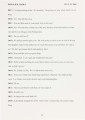
Show DONALD H. MABEY J 19 20 4 eslie R. Groves was the Army commander of the whol proj ct, app int d by Pr id nt Roosevelt, through the Army command. Besides Los Alamos, he was in command of th Tennessee plant (Oakridge) the Hanover, Washington plant the Air Force B-29 Group in Albuquerque, New Mexico, and the Wendover Base. The B-29 group would make practice bomb runs from Wendover to Albuquerque and Albuquerque to Wendover and Alamogordo Test Base. Groves had the entire responsibility for the whole proj ect. Dr. Robert Oppenheimer was our boss at Los Alamos, New Mexico. It was quite a challenge to work there. Shortly after I went there, I was injured and wound up in the hospital for three weeks. They wouldn't allow me to go back into the manufacturing plant with my hand in a sling. As we left the manufacturing plant every morning, we had to put our hands in the Geiger counter to see if we were picking up radioactivity. If we did, we had to go to the hospital for tests. There was another precision tool and die maker from Salt Lake City who I knew. He broke out all over on his body with running sores like boils. He was extremely allergic to the materials. They took him out and put him in some trunks and a T -shirt in the sunshine. A couple of months later, they put him back to work. Two weeks later, he broke out again. There were some apparent dangers there. I don't think that people really understood about radioactivity at that time. So they were monitoring it, trying to figure it out. We had to sign documents when we left there of what areas we'd worked in. It was a whole stack of documents. After I had the accident, they wouldn't send me back to work for a while and they assigned me to work for the chief security officer, Major DeSilva. I was to be his jeep driver with his police dog on the seat by my side. So then I was changed from a "blue 13 |
| Reference URL |
https://collections.lib.utah.edu/ark:/87278/s62z37kf/1033123 |