| Title |
Wayne S. Winters, American Fork, Utah: an interview by Benjamin Bahlmann, April 26 2001: Saving the Legacy tape nos. 388 & 389 |
| Alternative Title |
Wayne S. Winters, Saving the legacy: an oral history of Utah's World War II veterans, ACCN 2070, American West Center, University of Utah |
| Creator |
Winters, Wayne S., 1924-2011 |
| Contributor |
University of Utah. American West Center; Bahlmann, Benjamin J. |
| Publisher |
Digitized by J. Willard Marriott Library, University of Utah |
| Date |
2001-04-26 |
| Date Digital |
2015-12-16 |
| Access Rights |
I acknowledge and agree that all information I obtain as a result of accessing any oral history provided by the University of Utah's Marriott Library shall be used only for historical or scholarly or academic research purposes, and not for commercial purposes. I understand that any other use of the materials is not authorized by the University of Utah and may exceed the scope of permission granted to the University of Utah by the interviewer or interviewee. I may request permission for other uses, in writing to Special Collections at the Marriott Library, which the University of Utah may choose grant, in its sole discretion. I agree to defend, indemnify and hold the University of Utah and its Marriott Library harmless for and against any actions or claims that relate to my improper use of materials provided by the University of Utah. |
| Spatial Coverage |
New Guinea; Philippines; Borneo |
| Subject |
Winters, Wayne S., 1924-2011--Interviews; Veterans--Utah--Biography; World War, 1939-1945--Personal narratives, American; World War, 1939-1945--Aerial operations, American; World War, 1939-1945--Campaigns--Pacific Area--Personal narratives, American |
| Description |
Transcript (105 pages) of an interview by Benjamin Bahlmann with Wayne S. Winters on April 26, 2001. From tape numbers 388 and 389 in the "Saving the Legacy" Oral History Project |
| Collection Number and Name |
Accn2070, Saving the Legacy oral history project, 2001-2010 |
| Abstract |
Winters (b. 1924) discusses his childhood in Hoytsville, Utah, including his schooling and family. After enlisting in the Army Air Corps in November 1942, he was sent to Fresno, California, for basic training. He received pre-flight training at Pullman, Washington, and Santa Ana, California; primary training in Blythe, California; and advanced training at Williams Field in Mesa, Arizona, where he graduated in April 1944. He also took gunnery training in AT-6’s at Ajo, Arizona, and trained for P-39’s in Victorville, California. Winters eventually flew P-38L-5 aircraft. He was at Hamilton Field, California, before being sent to New Guinea around February 1945. He was assigned to the 18th Fighter Group, 44th Fighter Squadron, 13th Air Force in Zamboanga, and flew 25 missions, including into Borneo. He discusses his missions and experiences. He was discharged in early 1946 and stayed in the Reserves for approximately 12 years. Mr. Winter’s civilian career was as an ecologist for Geneva Steel for more than 30 years. He also served on the State of Utah Road Commission, having been appointed by Governor Calvin Rampton. Interviewed by Benjamin Bahlmann. 105 pages. |
| Type |
Text |
| Genre |
oral histories (literary works) |
| Format |
application/pdf |
| Extent |
105 pages |
| Language |
eng |
| Rights |
 |
| Scanning Technician |
Mazi Rakhsha |
| Conversion Specifications |
Original scanned with Kirtas 2400 and saved as 400 ppi uncompressed TIFF. PDF generated by Adobe Acrobat Pro X for CONTENTdm display |
| ARK |
ark:/87278/s6f211sb |
| Topic |
Personal narratives--American; Veterans; World War (1939-1945); Military operations, Aerial--American |
| Setname |
uum_slohp |
| ID |
1031935 |
| Reference URL |
https://collections.lib.utah.edu/ark:/87278/s6f211sb |
| Title |
Page 22 |
| Format |
application/pdf |
| Setname |
uum_slohp |
| ID |
1031851 |
| OCR Text |
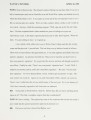
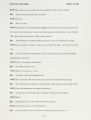
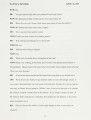
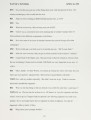
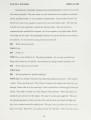
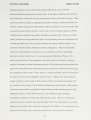
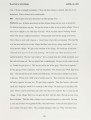
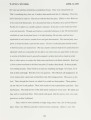
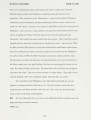
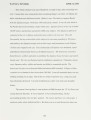
Show WY . WI TER wa not on of the more likeable pla e . It wa out in th d rt. It wa h t and mil and mile away from everything. BB: Where you till with the "W' s"? WSW:Oh, yes. It was still alphabetical. We "W's' stayed together. Anyway, we left Santa Ana that night and our instructions were, "Now when you get to your po t, be dressed in your best clothing, a tie, everything." They put u on a train and we traveled overnight from Santa Ana to Blythe. In the morning, when we woke up, our railcar was on a siding. They'd put us there during the night when we were asleep. We woke up and looked around and all we could see was desert. Way off in the distance, we could occasionally see planes flying. We couldn't even see the field. So we waited there. We were all dressed up the way we were told we should be. Pretty soon, we saw a caravan of vehicles coming towards us. They stopped outside the train. The officer who was heading up the caravan didn't have a tie on, and was very relaxed. He said, "Take off those ties (laughs)." I guess because of where we were located, the ground discipline was relaxed. The flying wasn't. Flying was always very strict, but the ground discipline was relaxed. My first ride in an airplane was at Blythe, California, in aPT -22. [Editor 's note: The Ryan PT-22 "Recruit" was the first monoplane primary trainer used by the Army Air Corps. It was a single engine low-winged monoplane and featured two tandem open cockpits and fixed landing gear.] I remember the instructor. We were always assigned five cadets to an instructor. He started talking about the airplane and so forth. He was using language that I just didn't understand. I didn't even know the basic parts of most airplanes and he was talking about down-wind legs and base legs. I had no idea what he was talking about. So I really started out green. We were supposed to get five hours of 22 |
| Reference URL |
https://collections.lib.utah.edu/ark:/87278/s6f211sb/1031851 |