| Title |
Donald Dewey Stout, Brigham City, Utah: an interview by Becky B. Lloyd, March 5, 2005: Saving the Legacy tape no. 719 |
| Alternative Title |
Donald Dewey Stout, Saving the legacy: an oral history of Utah's World War II veterans, ACCN 2070, American West Center, University of Utah |
| Creator |
Stout, Donald Dewey, 1922-2013 |
| Contributor |
Lloyd, Becky B.; University of Utah. American West Center |
| Publisher |
Digitized by J. Willard Marriott Library, University of Utah |
| Date |
2005-03-05 |
| Date Digital |
2015-12-16 |
| Access Rights |
I acknowledge and agree that all information I obtain as a result of accessing any oral history provided by the University of Utah's Marriott Library shall be used only for historical or scholarly or academic research purposes, and not for commercial purposes. I understand that any other use of the materials is not authorized by the University of Utah and may exceed the scope of permission granted to the University of Utah by the interviewer or interviewee. I may request permission for other uses, in writing to Special Collections at the Marriott Library, which the University of Utah may choose grant, in its sole discretion. I agree to defend, indemnify and hold the University of Utah and its Marriott Library harmless for and against any actions or claims that relate to my improper use of materials provided by the University of Utah. |
| Spatial Coverage |
Belgium; Germany |
| Subject |
Stout, Donald Dewey, 1922-2013--Interviews; Veterans--Utah--Biography; World War, 1939-1945--Personal narratives, American; World War, 1939-1945--Military operations, American; World War, 1939-1945--Campaigns--Europe, Northern--Personal narratives, American |
| Description |
Transcript (53 pages) of an interview by Becky B. Lloyd with Donald Dewey Stout on March 5, 2005. From tape number 719 in the "Saving the Legacy" Oral History Project |
| Collection Number and Name |
Accn2070, Saving the Legacy oral history project, 2001-2010 |
| Abstract |
Mr. Stout was born on October 5, 1922, in Salt Lake City, Utah. He discusses his childhood and the Depression. He graduated from the University of Utah in 1943, where he was involved in ROTC. He enlisted in the Army and graduated from Officer Candidate School in 1944. After artillery training he went overseas with the 9th Armored Division, Combat Command A in January 1945. He entered combat in Belgium and participated in the battle at Remagen. After a period as a forward observer with the 16th Armored Field Artillery, he served occupation duty in Germany until transferred back to the states. He was discharged in March 1946 and stayed in the Reserves. He was called up during the Korean conflict and served for two years in Germany. As a civilian, he worked for the military. Interviewed by Becky Lloyd. 53 pages. |
| Type |
Text |
| Genre |
oral histories (literary works) |
| Format |
application/pdf |
| Extent |
53 pages |
| Language |
eng |
| Rights |
 |
| Scanning Technician |
Mazi Rakhsha |
| Conversion Specifications |
Original scanned with Kirtas 2400 and saved as 400 ppi uncompressed TIFF. PDF generated by Adobe Acrobat Pro X for CONTENTdm display |
| ARK |
ark:/87278/s65q6z4z |
| Topic |
Personal narratives--American; Veterans; World War (1939-1945) |
| Setname |
uum_slohp |
| ID |
1031578 |
| Reference URL |
https://collections.lib.utah.edu/ark:/87278/s65q6z4z |
| Title |
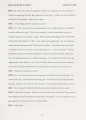
Page 27 |
| Format |
application/pdf |
| Setname |
uum_slohp |
| ID |
1031551 |
| OCR Text |
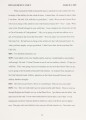
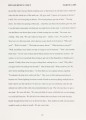
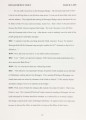
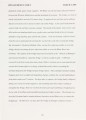
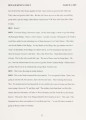
Show DONALD DEWEY STOUT M R H 5 2005 infantry unit. In his capacity as a forward observer, Mr. Stout would have been attached to a forward tank platoon or company. From there, he 'd call in and direct the fire of hi artillery battery at the request of the tank commander or on his own initiative. Since he was the means for bringing artillery support in for the whole tank unit, he should not have been risked by being in a lead tank, which was usually one of the first to get hit. At the same time he needed to be close to the tank commander who would have been in one of the tanks toward the front of the column.] I wasn't supposed to use my tank as a tank (for offensive purposes), particularly. Of course, if there were an immediate target out in front, my people (four-man tank crew) knew how to do that (fight with the tank and take out the target). Anyway, so there we stopped. I said, "What are we stopping for?" He (my driver) said, "Well the other tank's just up there." I said, "Well, go up there and bump him. Get off this bridge." Our motor was still going, so he put it in (gear) and I would say we moved ten feet. All of a sudden, I had cement landing on my helmet because the bridge was getting blown up by a guy (German) down the road, I guess. Anyway, we were on the bridge. There was this other tank and there was my tank. I was maybe fifty-five percent across the bridge. We moved ten feet and Ka-Boom! Cement was falling. I look back and behind my tank there was no bridge. The explosion had stopped our motor. The pressure of the explosion had stopped it. I said, "Can you get this tank to start again?" "Mumble, mumble." He got it started. I said, "Let's get off. We don't have a tail end on the road (laughs)." So we moved off. But ten feet less and we'd have just gone right back like this. About three feet of my tank tracks were hanging over the edge. The rest of my tank still had pavement under it. The majority of my tank had pavement underneath. 27 |
| Reference URL |
https://collections.lib.utah.edu/ark:/87278/s65q6z4z/1031551 |