| Title |
Ray Cope, Springville, Utah: an interview by Ben Bahlmann, February 1, 2002: Saving the Legacy tape nos. 485 & 486 |
| Alternative Title |
Ray Cope, Saving the legacy: an oral history of Utah's World War II veterans, ACCN 2070, American West Center, University of Utah |
| Creator |
Cope, Ray, 1924- |
| Contributor |
University of Utah. American West Center; Bahlmann, Benjamin J. |
| Publisher |
Digitized by J. Willard Marriott Library, University of Utah |
| Date |
2002-02-01 |
| Date Digital |
2015-12-16 |
| Access Rights |
I acknowledge and agree that all information I obtain as a result of accessing any oral history provided by the University of Utah's Marriott Library shall be used only for historical or scholarly or academic research purposes, and not for commercial purposes. I understand that any other use of the materials is not authorized by the University of Utah and may exceed the scope of permission granted to the University of Utah by the interviewer or interviewee. I may request permission for other uses, in writing to Special Collections at the Marriott Library, which the University of Utah may choose grant, in its sole discretion. I agree to defend, indemnify and hold the University of Utah and its Marriott Library harmless for and against any actions or claims that relate to my improper use of materials provided by the University of Utah. |
| Spatial Coverage |
Philippines; New Guinea; Morotai Island, Indonesia |
| Subject |
Cope, Ray, 1924- --Interviews; Veterans--Utah--Biography; World War, 1939-1945--Personal narratives, American; World War, 1939-1945--Military operations, American; World War, 1939-1945--Campaigns--Pacific Area--Personal narratives, American |
| Description |
Transcript (81 pages) of an interview by Benjamin Bahlmann with Ray Cope on February 1, 2002. From tape numbers 485 and 486 in the "Saving the Legacy" Oral History Project |
| Collection Number and Name |
Accn2070, Saving the Legacy oral history project, 2001-2010 |
| Abstract |
Cope (b. 1924) was born in Tropic, Utah. He discusses his childhood, work, the Depression and his schooling. He was drafted into the Army in July 1943 and received basic training at Fort Wolters, Texas. He was shipped overseas in June 1944 to New Guinea where he joined the 31st Infantry Division, 167th Infantry Regiment. Cope participated in the battle at Morotai Island before returning to New Guinea for guard duty. He later participated in the battle at Mindanao. After the war ended, he joined the 96th Infantry Division on Mindoro Island until he was discharged in February 1946. Interviewed by Ben Bahlmann. 81 pages. |
| Type |
Text |
| Genre |
oral histories (literary works) |
| Format |
application/pdf |
| Extent |
81 pages |
| Language |
eng |
| Rights |
 |
| Scanning Technician |
Mazi Rakhsha |
| Conversion Specifications |
Original scanned with Kirtas 2400 and saved as 400 ppi uncompressed TIFF. PDF generated by Adobe Acrobat Pro X for CONTENTdm display |
| ARK |
ark:/87278/s6h1543d |
| Topic |
Personal narratives--American; Veterans; World War (1939-1945) |
| Setname |
uum_slohp |
| ID |
1031418 |
| Reference URL |
https://collections.lib.utah.edu/ark:/87278/s6h1543d |
| Title |
Page 15 |
| Format |
application/pdf |
| Setname |
uum_slohp |
| ID |
1031351 |
| OCR Text |
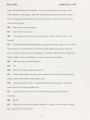
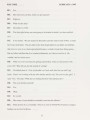
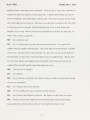
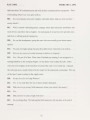
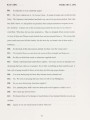
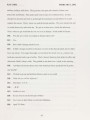
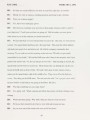
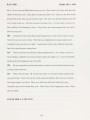
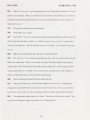
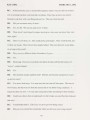
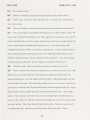
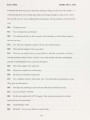
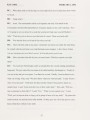
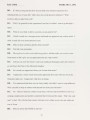
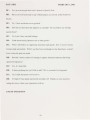
Show RAY COPE BR R 1 2002 BB: So at that point, that meant that you were going into the Army. RC: Ye. BB: Did you ever con ider enlisting to avoid the Army infantry? Did you con ider going to something like the Navy or something other than the Army? RC: No, I didn't give it any thought. Well, I could have joined the Marines and I could have probably gotten into the Air Force, but I just took it as it came. I wa just dumb enough not to know the difference. That was the thing of it. BB: So you were taken in, you said, in July of '43? RC: Yes. BB: So you probably were inducted at Fort Douglas, I guess? RC: Fort Douglas. We spent a week in Fort Douglas and then I went to Camp Wolters, Texas. That's where I took my training. It was twenty-one weeks of intensive basic training. BB: When you first got your draft card, did you have to go somewhere locally for physicals first? RC: They took us all to Salt Lake. BB: And that's when the physicals were? Then did you get to come home again or once you left, you were in? RC: Once we left home, we were in. BB: Were there other people of your age group with you that you knew? RC: Oh, yes. The morning I left on the old Bamberger train that went through town, they gathered us up. They started in Payson and from each community, they gathered up the draftees as they went up the line. By the time we got to Salt Lake we had a whole carload. 15 |
| Reference URL |
https://collections.lib.utah.edu/ark:/87278/s6h1543d/1031351 |