| Title |
Albert E. Knight, South Jordan, Utah: an interview by Becky B. Lloyd, June 21, 2004: Saving the Legacy tape no. 664 |
| Alternative Title |
Albert E. Knight, Saving the legacy: an oral history of Utah's World War II veterans, ACCN 2070, American West Center, University of Utah |
| Creator |
Knight, Albert E., 1921-2012 |
| Contributor |
Lloyd, Becky B.; University of Utah. American West Center |
| Publisher |
Digitized by J. Willard Marriott Library, University of Utah |
| Date |
2004-06-21 |
| Date Digital |
2015-12-16 |
| Access Rights |
I acknowledge and agree that all information I obtain as a result of accessing any oral history provided by the University of Utah's Marriott Library shall be used only for historical or scholarly or academic research purposes, and not for commercial purposes. I understand that any other use of the materials is not authorized by the University of Utah and may exceed the scope of permission granted to the University of Utah by the interviewer or interviewee. I may request permission for other uses, in writing to Special Collections at the Marriott Library, which the University of Utah may choose grant, in its sole discretion. I agree to defend, indemnify and hold the University of Utah and its Marriott Library harmless for and against any actions or claims that relate to my improper use of materials provided by the University of Utah. |
| Spatial Coverage |
Hawaii; Okinawa, Japan |
| Subject |
Knight, Albert E., 1921-2012--Interviews; Veterans--United States--Biography; World War, 1939-1945--Personal narratives, American; World War, 1939-1945--Aerial operations, American; World War, 1939-1945--Campaigns--Pacific Area--Personal narratives, American; Bomber pilots--Biography |
| Description |
Transcript (38 pages) of an interview by Becky B. Lloyd with Albert E. Knight on June 21, 2004. From tape number 664 in the "Saving the Legacy" Oral History Project |
| Collection Number and Name |
Accn2070, Saving the Legacy oral history project, 2001-2010 |
| Abstract |
Knight (b. 1921) was born in Idaho, where his father was a farmer. He graduated from college with a degree in pharmacy in June 1942. Shortly thereafter he joined the Navy and trained as a pilot. He was assigned to Carrier Aircraft Service Unit 1 at Pearl Harbor. He flew supplies from the Naval Air Station in Kauai. He later served on the USS Curtiss, and in Okinawa. He was discharged in November 1945. Interviewed by Becky Lloyd. 38 pages. |
| Type |
Text |
| Genre |
oral histories (literary works) |
| Format |
application/pdf |
| Extent |
38 pages |
| Language |
eng |
| Rights |
 |
| Scanning Technician |
Mazi Rakhsha |
| Conversion Specifications |
Original scanned with Kirtas 2400 and saved as 400 ppi uncompressed TIFF. PDF generated by Adobe Acrobat Pro X for CONTENTdm display |
| ARK |
ark:/87278/s69k6dbw |
| Topic |
Personal narratives--American; Veterans; World War (1939-1945); Military operations, Aerial--American; Bomber pilots |
| Setname |
uum_slohp |
| ID |
1031036 |
| Reference URL |
https://collections.lib.utah.edu/ark:/87278/s69k6dbw |
| Title |
Page 24 |
| Format |
application/pdf |
| Setname |
uum_slohp |
| ID |
1031021 |
| OCR Text |
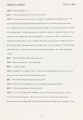
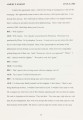
Show LB RT E. KNI HT J 21 2004 d gr turn and go right back, back to Guam. Well, Guam wa n t ry big and it wa awfully black. I didn't know whether I could even find Guam. o I decid d t fly n but it didn't get any better. I didn't fly any more than a hundred feet above the water becau it was so black. As a matter of fact, there was a merchant ship right down there [points down] and the mast wasn't very far below. I learned quickly why they called our form of navigation dead reckoning. It was because you'd better "reckon" properly (laughs). So I stayed on course. There was a heavy wind and, oh, boy, right when I thought I should see it, there was the little green shoreline of Tinian. Then from Tinian to Saipan was a piece of cake. BEC: But it was just black and stormy the whole way? ALB: The whole way. I found out later that the only other plane that made that flight that day made it on radar and it wasn't that good. I was truly blessed. The more I think about it, the more scared I get. That was dumb. [phone rings, tape off, tape on] ALB: I was on Saipan when the first B-29s came out to start hitting Japan with all their firebombs and stuff. I didn't see how they could ever build a bigger airplane, but they have. So they made another airstrip parallel to the old one. It was down over a hill. It was what they called the transient strip. It was for our airplanes. We moved our airplanes down there and other lesser planes were down there, planes other than B-29s. One day, at high noon, we were working on the Avenger, the torpedo bomber. We were having a little engine problem. I was sitting in the cockpit and two crewmen were on the cowling just behind the propeller out there. We heard a bullet hit the runway and go, "Ping!" "Oh, some Marine took a shot at something." Then we heard a bunch of 24 |
| Reference URL |
https://collections.lib.utah.edu/ark:/87278/s69k6dbw/1031021 |