| Title |
Michael Schoenfeld, Salt Lake City, Utah: an interview by John C. Worsencroft, August 31 and October 6, 2009: Saving the Legacy tape nos. IA-3 and IA-9 |
| Alternative Title |
Michael Schoenfeld, Saving the legacy: an oral history of Utah's World War II veterans, ACCN 2070, American West Center, University of Utah |
| Creator |
Schoenfeld, Michael |
| Contributor |
Worsencroft, John C., 1981-; University of Utah. American West Center |
| Publisher |
Digitized by J. Willard Marriott Library, University of Utah |
| Date |
2009-08-31; 2009-10-06 |
| Date Digital |
2015-12-16 |
| Access Rights |
I acknowledge and agree that all information I obtain as a result of accessing any oral history provided by the University of Utah's Marriott Library shall be used only for historical or scholarly or academic research purposes, and not for commercial purposes. I understand that any other use of the materials is not authorized by the University of Utah and may exceed the scope of permission granted to the University of Utah by the interviewer or interviewee. I may request permission for other uses, in writing to Special Collections at the Marriott Library, which the University of Utah may choose grant, in its sole discretion. I agree to defend, indemnify and hold the University of Utah and its Marriott Library harmless for and against any actions or claims that relate to my improper use of materials provided by the University of Utah. |
| Spatial Coverage |
Kuwait; Iraq |
| Subject |
Schoenfeld, Michael--Interviews; Veterans--Utah--Biography; Iraq War, 2003-2011--Personal narratives, American |
| Description |
Transcript (40, 32 pages) of interviews by John C. Worsencroft with Michael Schoenfeld on August 31 and October 6, 2009. From tape numbers IA-3 and IA-9 in the "Saving the Legacy" Oral History Project |
| Collection Number and Name |
Accn2070, Saving the Legacy oral history project, 2001-2010 |
| Abstract |
Schoenfeld was born and raised in Utah. His father was a thirty plus year veteran of the Marine Corps Reserve, which nurtured his interest in joining. He joined the Marine Corps Reserves in 1986. Bootcamp was a great experience despite some of the challenges. He was activated after 9/11 and went to Iraq, experiencing SCUD alerts and passing by signs of earlier destruction during Desert Storm. He recalls the tragedy of losing his Staff Sergeant, their first casualty, in a humvee driving mishap. Later his unit was involved in a heavy firefight in an Iraqi neighborhood where he almost ran out of ammo before the Heavy Weapons commander rushed in with a load for the unit. Michael enjoys his continuing work in the Reserves and has no regrets. Interviewed by John C. Worsencroft. 40 pages and 32 pages. |
| Type |
Text |
| Genre |
oral histories (literary works) |
| Format |
application/pdf |
| Extent |
40 pages and 32 pages |
| Language |
eng |
| Rights |
 |
| Scanning Technician |
Mazi Rakhsha |
| Conversion Specifications |
Original scanned with Kirtas 2400 and saved as 400 ppi uncompressed TIFF. PDF generated by Adobe Acrobat Pro X for CONTENTdm display |
| ARK |
ark:/87278/s6bz883z |
| Topic |
Personal narratives--American; Veterans; Iraq War (2003-2011) |
| Setname |
uum_slohp |
| ID |
1029472 |
| Reference URL |
https://collections.lib.utah.edu/ark:/87278/s6bz883z |
| Title |
Page 24 |
| Format |
application/pdf |
| Setname |
uum_slohp |
| ID |
1029421 |
| OCR Text |
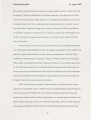
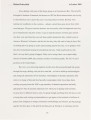
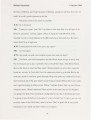
Show Michael choenfeld 1 u u t 2009 to do? I would say we were prepared as anybody to go do what we did. But v n cti duty, some of the active duty units were worse off than us because right bef re the ground invasion they get this whole dump of Marines that were coming out of the ch of infantry, a bunch of privates and PFCs, where at least I had for the most part, at least corporals in charge of all my fire teams and sergeants in charge of my squads. Some of these active duty units, they had lance corporals. They were really short. Overall, I think we were actually more experienced in our enlisted ranks than them. Our officer ranks, probably not. We had the experience; we just didn't have the daily experience that an active duty unit has because our platoon commanders were primarily captains, where the active duty units were primarily second lieutenants. But we just didn't have that daily operational experience that they had. JCW: So the unit got the order to be activated again. You tracked everybody down. They're back in Camp Pendleton and ready to go. Why don't you pick up the story from there. MS: It was actually an extension of our orders, not necessarily another activation. They just extended orders and they did it indefinitely. But, once again, rumors always fly. People speculating what's going to happen, this and that. I tried to tell my Marines, "Hey, look, this is the way it is. We hurry up and wait. We'll be told what we're going to do. What we do know is we're going to be involved in this to some degree." There's a book out there on killing, there's a couple of others [books]. We would try and discuss the aspects, what to expect, combat. My platoon sergeant would talk to the Marines. I had a couple other good sergeants that hadn't necessarily been involved in 23 |
| Reference URL |
https://collections.lib.utah.edu/ark:/87278/s6bz883z/1029421 |