| Title |
Blandina Tuero, Salt Lake City, Utah: an interview by Becky B. Lloyd, June 18, 2002: Saving the Legacy tape no. 568 |
| Alternative Title |
Blandina Tuero, Saving the legacy: an oral history of Utah's World War II veterans, ACCN 2070, American West Center, University of Utah |
| Creator |
Tuero, Blandina, 1921-2009 |
| Contributor |
Lloyd, Becky B.; University of Utah. American West Center |
| Publisher |
Digitized by J. Willard Marriott Library, University of Utah |
| Date |
2002-06-18 |
| Date Digital |
2015-12-16 |
| Access Rights |
I acknowledge and agree that all information I obtain as a result of accessing any oral history provided by the University of Utah's Marriott Library shall be used only for historical or scholarly or academic research purposes, and not for commercial purposes. I understand that any other use of the materials is not authorized by the University of Utah and may exceed the scope of permission granted to the University of Utah by the interviewer or interviewee. I may request permission for other uses, in writing to Special Collections at the Marriott Library, which the University of Utah may choose grant, in its sole discretion. I agree to defend, indemnify and hold the University of Utah and its Marriott Library harmless for and against any actions or claims that relate to my improper use of materials provided by the University of Utah. |
| Spatial Coverage |
Camp White, Jackson County, Oregon, United States; California, United States |
| Subject |
Tuero, Blandina, 1921-2009--Interviews; Veterans--Utah--Biography; World War, 1939-1945--Personal narratives, American; World War, 1939-1945--Women--United States--Biography; United States--Army--Women's Army Auxiliary Corps; Prisoners of war--United States; Prisoners of war--Germany; World War, 1939-1945--Prisoners and prisons, American |
| Keywords |
WACs; Cooks; Military hospitals; POW camps |
| Description |
Transcript (28 pages) of an interview by Becky B. Lloyd with Blandina Tuero, on June 18, 2002. From tape number 568 in the "Saving the Legacy" Oral History Project |
| Collection Number and Name |
Accn2070, Saving the Legacy oral history project, 2001-2010 |
| Abstract |
Ms. Teuro (b. 1921) grew up in Hartshorne, Oklahoma. She joined the WACs in March 1943 and moved to Des Moines for basic training. She received additional training there in the cooks and bakers school. She was assigned to Camp White in Oregon, which was a training camp and also the site of a German POW camp. She describes her experiences there. In mid-1945, Teuro was transferred to the Presidio in San Francisco, and then to Fort Baker, a nearby hospital, in 1946. After being discharged, Ms. Tuero worked as a cook for the Granite School District before retiring at age 71. Interviewed by Becky Lloyd. 28 pages. |
| Type |
Text |
| Genre |
oral histories (literary works) |
| Format |
application/pdf |
| Extent |
28 pages |
| Language |
eng |
| Rights |
 |
| Scanning Technician |
Mazi Rakhsha |
| Conversion Specifications |
Original scanned with Kirtas 2400 and saved as 400 ppi uncompressed TIFF. PDF generated by Adobe Acrobat Pro X for CONTENTdm display |
| ARK |
ark:/87278/s6pk2j8j |
| Topic |
Personal narratives--American; Veterans; World War (1939-1945); United States. Army. Women's Army Auxiliary Corps; Prisoners of war |
| Setname |
uum_slohp |
| ID |
1029107 |
| Reference URL |
https://collections.lib.utah.edu/ark:/87278/s6pk2j8j |
| Title |
Page 11 |
| Format |
application/pdf |
| Setname |
uum_slohp |
| ID |
1029089 |
| OCR Text |
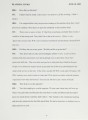
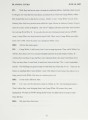
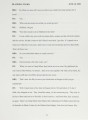
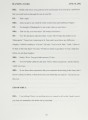
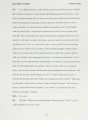
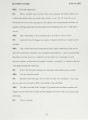
Show BLANDINA TUERO J 1 2002 BT: Oh, yes we had to do little extra details. BBL: Did you still keep cooking? BT: Yes, they put us on KP or had us go clean the sidewalk whatever. BBL: I was just wondering, while you were doing this training did you have any terrible disasters, where you burned the soup or you couldn't get the fire right, or the hash was awful or something? BT: Well, there was one experience. After we graduated from the cooking, they sent us to the city. The Army had a hotel there, a big one. They had all these women working there. They had all different jobs. The kitchen was huge. It didn't happen to me but I was right there when it happened. They were taking these big pans full of beans to the serving area, and it slipped (laughs). I remember I had my gloves on to touch the food and everybody was looking at each other, said, "What are we going to do?" "Let's put the beans that didn't touch the floor back in the pan, at least to get started" (laughs). BBL: You invoked the "five-second rule" and put them back in the pan? BT: As I told you, I was the one that started that. Nobody else knew what to do. Oh, we had a few things happen like that but I didn't have anything like that happen to me. Well, I did once. When we were out in Oregon, we were out in the camp. We'd get our groceries the day before of what we were going to serve the next day. One day they brought us fish. They were little and smelled-I've forgotten what they called them. We were supposed to deep fry them. But what could we do? They brought them in about at breakfast time. We should have had them the day before by noon. I don't know where our mess hall lieutenant was. She wasn't there. I think she was sick or something. It happened to be my shift and I was the first cook, so I had to figure out what to do. I 11 |
| Reference URL |
https://collections.lib.utah.edu/ark:/87278/s6pk2j8j/1029089 |