| Title |
William Smith, Bountiful, Utah: an interview by Becky B. Lloyd, July 15, 2004: Saving the Legacy tape no. 684 |
| Alternative Title |
William Smith, Saving the legacy: an oral history of Utah's World War II veterans, ACCN 2070, American West Center, University of Utah |
| Creator |
Smith, William, 1919-2013 |
| Contributor |
Lloyd, Becky B.; University of Utah. American West Center |
| Publisher |
Digitized by J. Willard Marriott Library, University of Utah |
| Date |
2004-07-15 |
| Date Digital |
2015-12-16 |
| Access Rights |
I acknowledge and agree that all information I obtain as a result of accessing any oral history provided by the University of Utah's Marriott Library shall be used only for historical or scholarly or academic research purposes, and not for commercial purposes. I understand that any other use of the materials is not authorized by the University of Utah and may exceed the scope of permission granted to the University of Utah by the interviewer or interviewee. I may request permission for other uses, in writing to Special Collections at the Marriott Library, which the University of Utah may choose grant, in its sole discretion. I agree to defend, indemnify and hold the University of Utah and its Marriott Library harmless for and against any actions or claims that relate to my improper use of materials provided by the University of Utah. |
| Spatial Coverage |
Hawaii; Campo, San Diego County, California; United States |
| Subject |
Smith, William, 1919-2013--Interviews; Veterans--Utah--Biography; World War, 1939-1945--Personal narratives, American; World War, 1939-1945--Military operations, American; Pearl Harbor (Hawaii), Attack on, 1941--Personal narratives, American |
| Keywords |
Bookkeeping; Financial disbursement |
| Description |
Transcript (36 pages) of an interview by Becky B. Lloyd with William Lester Smith on July 15, 2004. From tape number 684 in the "Saving the Legacy" Oral History Project |
| Collection Number and Name |
Accn2070, Saving the Legacy oral history project, 2001-2010 |
| Abstract |
Smith (b. 1919) was born in Graybull, Wyoming. He discusses his childhood, family, schooling, jobs and the Depression. He joined the Army in September 1939, received training on Angel Island near San Francisco, California, and was later shipped to Hawaii. He first worked in the chemical warfare office before taking assignment in the finance office, where he was working when Pearl Harbor was bombed. He attended Officer Candidate School in Indianapolis, Indiana, and was subsequently assigned to Camp Lockett, California, in disbursement, until he was discharged in September 1945. Interviewed by Becky Lloyd. 36 pages. |
| Type |
Text |
| Genre |
oral histories (literary works) |
| Format |
application/pdf |
| Extent |
36 pages |
| Language |
eng |
| Rights |
 |
| Scanning Technician |
Mazi Rakhsha |
| Conversion Specifications |
Original scanned with Kirtas 2400 and saved as 400 ppi uncompressed TIFF. PDF generated by Adobe Acrobat Pro X for CONTENTdm display |
| ARK |
ark:/87278/s6z05b7c |
| Topic |
Personal narratives--American; Veterans; World War (1939-1945); Pearl Harbor, Attack on (Hawaii : 1941) |
| Setname |
uum_slohp |
| ID |
1028484 |
| Reference URL |
https://collections.lib.utah.edu/ark:/87278/s6z05b7c |
| Title |
Page 21 |
| Format |
application/pdf |
| Setname |
uum_slohp |
| ID |
1028468 |
| OCR Text |
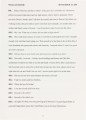
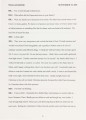
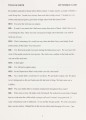
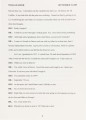
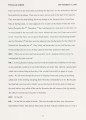
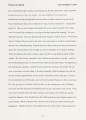
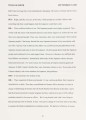
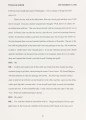
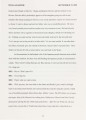
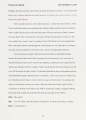
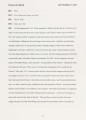
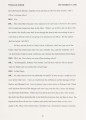
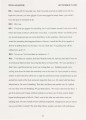
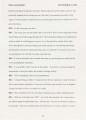
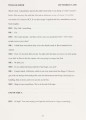
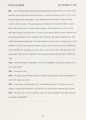
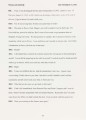
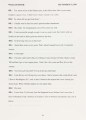
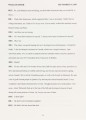
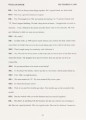
Show WILLIAM MITH PTEMB R 19 2001 Hawaii changed overnight from Wednesdays off and aturdays off it b cam as venday- a-week thing. Japanese disappeared off the streets and the whole world chang d and never to be the same again. We've been back several times since but it's never been the same since. It's not the old Hawaii. BEC: Do you remember when you got back to Honolulu and you saw all that devastation, do you remember what your thoughts were? Were you thinking, "All is lost?" BIL: Oh, I just thought we would lose the war if we didn't do something serious about this because so much had been destroyed. All those ships in Pearl Harbor were sitting there on their sides and one totally down. I mean it was such a terrible, terrible thing to see. I had a motor scooter so I could go to these different places as an officer, as an Army man, and see all the havoc. It was a frightening thing because we were, as I mentioned, unprepared basically, and mostly we were short of supplies. We didn't have supplies. Everything became rationed, immediately. There was no gasoline. We were just not prepared. So the ships came strictly with Army, for the Army supplies. Of course, we were fed well enough in the Army but the civilians had a terrible time for a while. BEC: Let me ask you about your specific duties in your office. You said you were supervising about, how many? BIL: I had about forty men. BEC: Forty people. BIL: We had huge forms, they were about twenty-four inches wide. We had to report to Washington, D.C., about our disbursements various places. We had to account for all the money. Now I was not personally responsible financially at that point until I became an 21 |
| Reference URL |
https://collections.lib.utah.edu/ark:/87278/s6z05b7c/1028468 |