| Title |
Ross Steele Harrison, February 9, 2004, Salt Lake City, Utah: an interview by Frances Merrill |
| Alternative Title |
Ross Steele Harrison, Saving the legacy: an oral history of Utah's World War II veterans, ACCN 2070, American West Center, University of Utah |
| Creator |
Harrison, Ross Steele, 1915-2006 |
| Contributor |
Merrill, Frances; University of Utah. American West Center |
| Publisher |
Digitized by J. Willard Marriott Library, University of Utah |
| Date |
2004-02-09 |
| Date Digital |
2015-12-16 |
| Access Rights |
I acknowledge and agree that all information I obtain as a result of accessing any oral history provided by the University of Utah's Marriott Library shall be used only for historical or scholarly or academic research purposes, and not for commercial purposes. I understand that any other use of the materials is not authorized by the University of Utah and may exceed the scope of permission granted to the University of Utah by the interviewer or interviewee. I may request permission for other uses, in writing to Special Collections at the Marriott Library, which the University of Utah may choose grant, in its sole discretion. I agree to defend, indemnify and hold the University of Utah and its Marriott Library harmless for and against any actions or claims that relate to my improper use of materials provided by the University of Utah. |
| Spatial Coverage |
Dateland, Yuma County, Arizona, United States; Yuma, Yuma County, Arizona, United States |
| Subject |
Harrison, Ross Steele, 1915-2006--Interviews; Veterans--United States--Biography; World War, 1939-1945--Personal narratives, American |
| Keywords |
Army Air Corps; KP |
| Description |
Transcript (21 pages) of an interview by Frances Merrill with Ross Steele Harrison on February 9, 2004. Part of in the "Saving the Legacy" Oral History Project |
| Collection Number and Name |
Accn2070, Saving the Legacy oral history project, 2001-2010 |
| Abstract |
Harrison (b. 1915) enlisted in the Army Air Corps in 1942 and attended basic training at Keesler Field. He served the majority of his army time at a base in Dateland, Arizona. He was discharged in 1945 at the rank of Corporal. Interviewed by Frances Merrill. 21 pages. |
| Type |
Text |
| Genre |
oral histories (literary works) |
| Format |
application/pdf |
| Extent |
21 pages |
| Language |
eng |
| Rights |
 |
| Scanning Technician |
Mazi Rakhsha |
| Conversion Specifications |
Original scanned with Kirtas 2400 and saved as 400 ppi uncompressed TIFF. PDF generated by Adobe Acrobat Pro X for CONTENTdm display |
| ARK |
ark:/87278/s6ff5vdn |
| Topic |
Personal narratives--American; Veterans; World War (1939-1945) |
| Setname |
uum_slohp |
| ID |
1028362 |
| Reference URL |
https://collections.lib.utah.edu/ark:/87278/s6ff5vdn |
| Title |
Page 12 |
| Format |
application/pdf |
| Setname |
uum_slohp |
| ID |
1028351 |
| OCR Text |
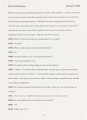
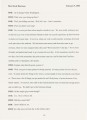
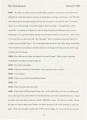
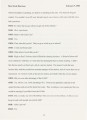
Show Ro teele Harri on ebruary 9 2004 RSH: Oh well we used to have to run the field, you know you d have to go clear v ry department on the base and so you'd go to the dentist you'd go to the doctor you d do thi and when I got all through running the base, this nice guy I was with, he said "You know, there's a lot of flu around. You really ought to have a flu shot." I thought that's what I should do. I'm going to do that so I won't be delayed getting off the base, and we were discharged. So, I got the flu shot and the next morning I couldn't even get up. I was so sick. I've never been so sick in my life. But I thought, "This is not going to hold me back, I'm going to get out of this Army." So I went ahead and ran all the rest of the things on the base, then I decided I'm not going to let this bother me, so I hung on for the next day and we got on buses and went home. FHM: How did you feel when you turned over your ID card? Did you have a military identification card that you had to turn in? RSH: No, I don't remember. FHM: When you traveled in the military, was it mostly by bus or train? RSH: Train and bus. FHM: When you go from these different bases? RSH: Yes. FHM: What was that experience like? RSH: Well, down in Mississippi it rains a lot. On the drill field, you'd be out drilling and you could dig a hole in the sand out on the beach there and water would fill the hole. You'd just dig it with your heel, you know, and it's half full of water. We had a lot of that. On the day that we were to ship out to Denver, we had to get up at 2:00 in the morning to catch the train. Well, the train didn't come until10:00 in the morning. So we sat out on the railroad 11 |
| Reference URL |
https://collections.lib.utah.edu/ark:/87278/s6ff5vdn/1028351 |