| Title |
Walter W. Bauer, Kanab, Utah: an interview by Winston P. Erickson, February 20, 2003: Saving the Legacy tape nos. 586 & 587 |
| Alternative Title |
Walter W. Bauer, Saving the legacy: an oral history of Utah's World War II veterans, ACCN 2070, American West Center, University of Utah |
| Creator |
Bauer, Walter W., 1925- |
| Contributor |
Erickson, Winston P., 1943-; University of Utah. American West Center |
| Publisher |
Digitized by J. Willard Marriott Library, University of Utah |
| Date |
2003-02-20 |
| Date Digital |
2015-12-16 |
| Access Rights |
I acknowledge and agree that all information I obtain as a result of accessing any oral history provided by the University of Utah's Marriott Library shall be used only for historical or scholarly or academic research purposes, and not for commercial purposes. I understand that any other use of the materials is not authorized by the University of Utah and may exceed the scope of permission granted to the University of Utah by the interviewer or interviewee. I may request permission for other uses, in writing to Special Collections at the Marriott Library, which the University of Utah may choose grant, in its sole discretion. I agree to defend, indemnify and hold the University of Utah and its Marriott Library harmless for and against any actions or claims that relate to my improper use of materials provided by the University of Utah. |
| Spatial Coverage |
Hawaii; Saipan, Northern Mariana Islands; Tinian, Northern Mariana Islands; Okinawa, Japan |
| Subject |
Bauer, Walter W., 1925- --Interviews; Veterans--Utah--Biography; World War, 1939-1945--Personal narratives, American; World War, 1939-1945--Military operations, American; World War, 1939-1945--Campaigns--Pacific Area--Personal narratives, American; Saipan, Battle of, Northern Mariana Islands, 1944--Personal narratives, American; World War, 1939-1945--Campaigns--Japan--Okinawa Island--Personal narratives, American |
| Description |
Transcript (61 pages) of an interview by Winston P. Erickson with Walter W. Bauer on February 20, 2003. From tape numbers 586 and 587 in the "Saving the Legacy" Oral History Project |
| Collection Number and Name |
Accn2070, Saving the Legacy oral history project, 2001-2010 |
| Abstract |
Walter Bauer (b. 1925) enlisted in the Marine Corps in April 1943. He attended boot camp in San Diego and received advanced training at Camp Elliott before being sent to Intelligence School. Shipped to Hawaii, he was redirected to the Marine Infantry. He participated in the battle for Saipan with the 6th Marines, 1st Battalion, as well as the battles on Tinian and Okinawa. Following the war, he was assigned to occupation duty in Japan. Mr. Bauer provides a description of his experiences in the military and during combat. He returned to the US in January 1946 for discharge. Mr. Bauer was a professional firefighter in civilian life. Interviewed by Winston P. Erickson. 61 pages. |
| Type |
Text |
| Genre |
oral histories (literary works) |
| Format |
application/pdf |
| Extent |
61 pages |
| Language |
eng |
| Rights |
 |
| Scanning Technician |
Mazi Rakhsha |
| Conversion Specifications |
Original scanned with Kirtas 2400 and saved as 400 ppi uncompressed TIFF. PDF generated by Adobe Acrobat Pro X for CONTENTdm display |
| ARK |
ark:/87278/s6w68nw6 |
| Topic |
Personal narratives--American; Veterans; World War (1939-1945); Saipan, Battle of (Northern Mariana Islands : 1944) |
| Setname |
uum_slohp |
| ID |
1028339 |
| Reference URL |
https://collections.lib.utah.edu/ark:/87278/s6w68nw6 |
| Title |
Page 37 |
| Format |
application/pdf |
| Setname |
uum_slohp |
| ID |
1028314 |
| OCR Text |
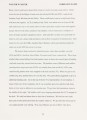
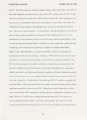
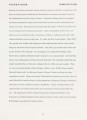
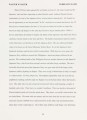
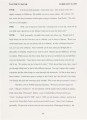
Show W T RW.B R BR R 2 2 0 WWB: Y e , everywhere they did. They wouldn t urr nd r and w had t kill them. A a matter of fact there were very few urvivor o to peak. On Saipan, we ran into the Chamorro , the native people. We had to hoot orne of them up at night becau they'd run around and we couldn't take a chance. Mo t of them urvived. One morning a family came out, a husband, a wife and I believe five children. She'd been hot in the buttocks, badly. So the husband came out of the cave originally and said his wife wa wounded but he said there were Japanese in there and they wouldn't let there t of them out. We told him to tell the Japanese to let them go because we were going to kill them anyway. Finally, the Japanese let them come out. So we took care of them. That poor lady ... Oh! She had a horrendous wound in her left buttock. Hopefully she survived but the husband and kids were all in as good as shape as they could be in a war, living in caves and so on. But the Chamorros were mostly pro-Japanese because the Japanese had gotten those islands in the treaty agreement after World War I. Saipan was, before that, a German island and Spanish before that. WPE: So the natives there appreciated the Japanese there more than those Europeans? WWB: Well, I would say that they were brainwashed to appreciate the Japanese rather than actually liking them. They had to put up with them or they'd get their head chopped off. Of course, I ran into some people on Guam and this boy told me that at five years old, the Japanese made him, along with all of his people, go out and work on the airfield. He was only five or six years old. So the Japanese weren't nice to the natives by any means. There are some reports that on Saipan and the other Marianas that the Japanese military not only encouraged but forced the civilians to commit "suicide" along with them. 37 |
| Reference URL |
https://collections.lib.utah.edu/ark:/87278/s6w68nw6/1028314 |